Roundtable: LCC’s Role in Building the Region’s Workforce
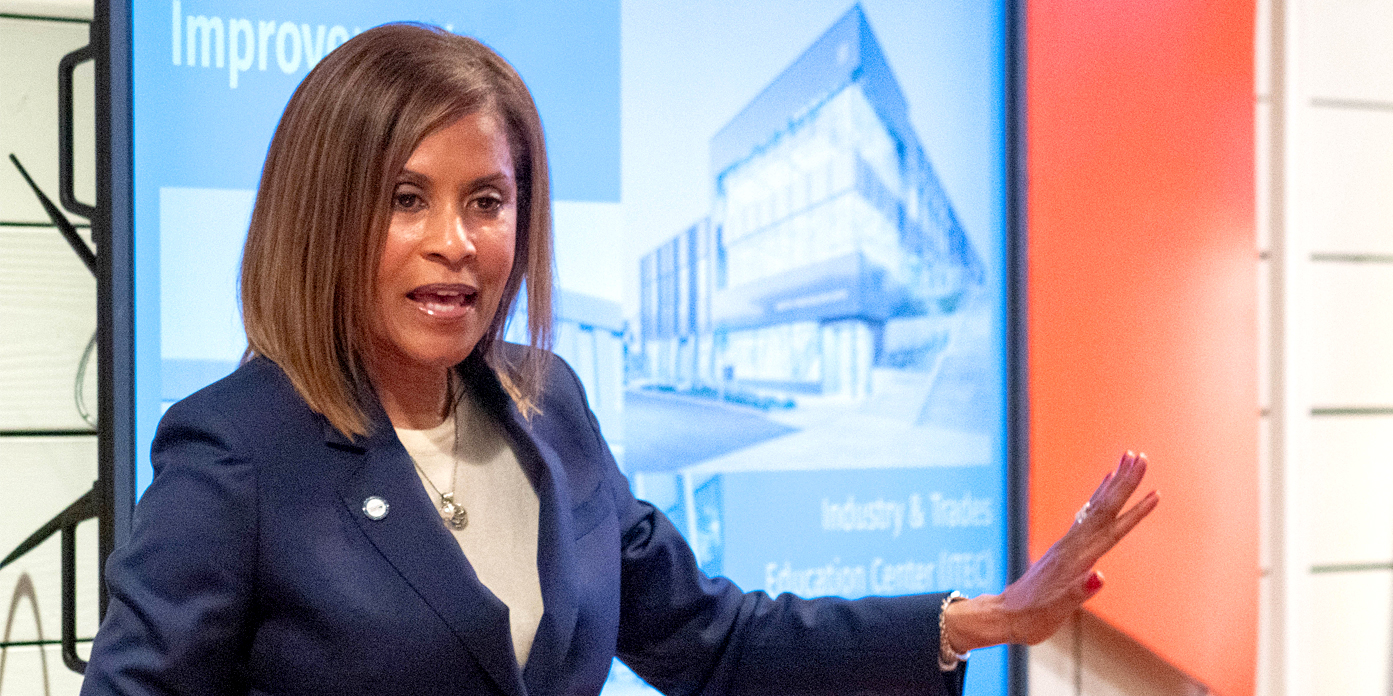
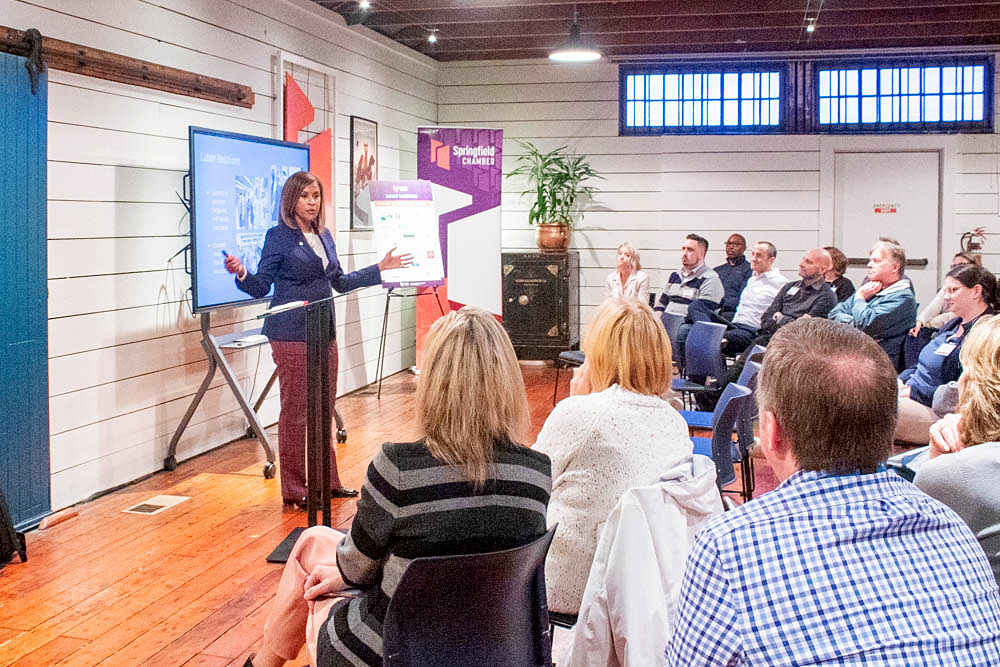
On Tuesday, the Springfield Area Chamber of Commerce closed out its 2025 Roundtable season with a candid conversation featuring Dr. Stephanie Bulger, president of Lane Community College. Business owners, educators, students, and community leaders came together at the Chamber Depot to examine LCC’s resources, challenges, and priorities under Dr. Bulger’s leadership.
Paige Walters, the Chamber’s Senior Director of Advocacy & Economic Development, opened the program by underscoring the purpose of the Chamber’s Roundtable series: to create space for informed dialogue around the issues that most directly affect employers and the broader community.
“I’m just a steward of Lane. We are all stewards of the college.”
– Dr. Stephanie Bulger, President, Lane Community College
A bold vision
Dr. Bulger opened with her overall vision: reimagining LCC as a destination for workforce development; and toward that end, embarking on a capital campaign and creating a student success framework with three overarching goals. The vision is distinctly student-focused, with student experience and student success outcomes front and center:
1. Improve LCC’s fiscal condition
2. Manage enrollment growth
3. Improve campus climate
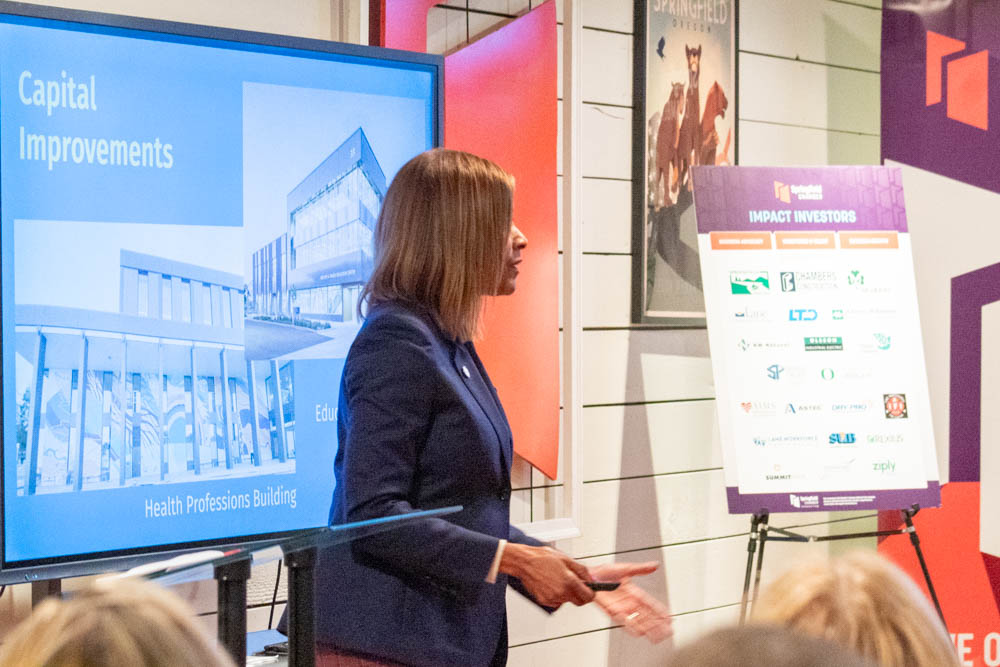
Capital improvements
Dr. Bulger highlighted how recent capital investments, funded by the 2020 bond, are transforming how Lane prepares students for the workforce. The new Health Professions Building is already expanding capacity in those areas of study, while the 54,000-sq.ft. Industry and Trades Education Center (ITEC) is reshaping trades education through the integration of fabrication, robotics, and apprenticeship training.
“We want students to have the kind of experience at our college that keeps them coming back to the institution throughout their lifetime.”
– Dr. Stephanie Bulger, President, Lane Community College
New academic offerings
Over the last three years, LCC has launched two new bachelor’s degrees: an applied bachelor’s in business management and a Bachelor of Science in nursing; along with new EMT-to-RN and LPN-to-RN pathways to address critical healthcare workforce gaps.
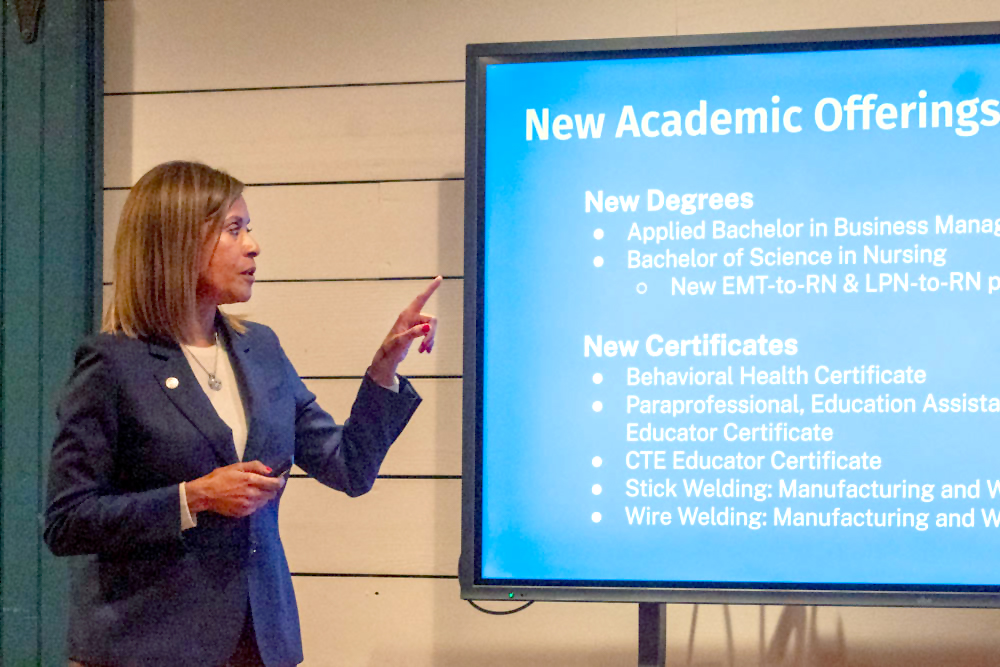

Lane has also introduced several new certificate programs including behavioral health, education support roles, CTE educators, and multiple manufacturing and welding certificates. These programs are short-term options designed for upskilling and career advancement.
Reversing declining enrollment
Dr. Bulger stepped into the LCC presidency in 2022 facing significant headwinds, including a steady decline in enrollment fueled by competition from online institutions and growing public skepticism about the affordability and value of higher education.
But Bulger is no stranger to improving enrollment numbers in community colleges. Prior to LCC, her 13-year tenure at Wayne County Community College in Detroit, Michigan, brought an enrollment expansion of more than 20,000 students.
LCC has since posted three consecutive years of enrollment growth, from 14,961 students in academic year 2022 to 17,360 students in academic year 2025, a 16% increase. Bulger noted that reversing this trend has been both a point of pride and a responsibility.
Financial mitigation
Dr. Bulger also addressed Lane’s current financial challenges with notable transparency. She clearly illustrated how the college is operating at a deficit, and how this deficit is large enough to trigger a required three-year mitigation plan that would:
1. Discontinue deficit spending
2. Restore a 10% Ending (General) Fund balance
3. Fund future strategic investments
Bulger outlined the constraints facing community colleges statewide, including capped state funding, limited property tax revenue, and tuition pressures. She acknowledged that new tuition increases must be avoided, as LCC students are already saddled with the second-highest community college tuition in the state.
Rather than abrupt cuts, Bulger has outlined a plan where Lane pursues an incremental approach of approximately $3 million per year. A full review of that plan is on the LCC Board’s agenda as an action item in January.
Partnerships as the path forward
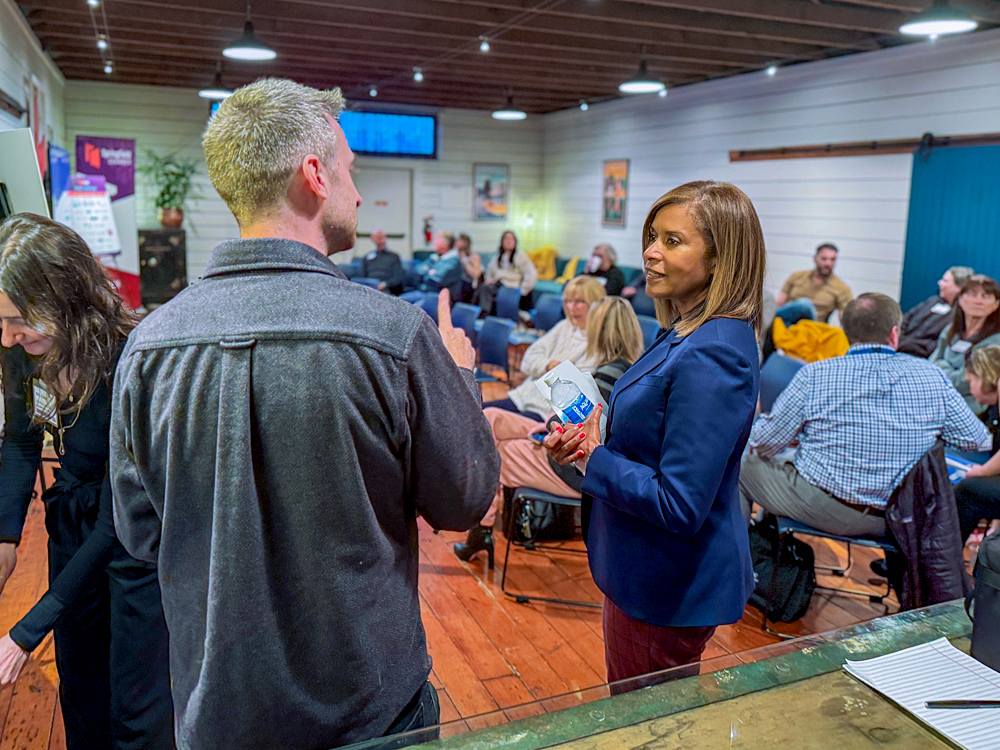
The presentation was followed by a robust Q&A session. Dr. Bulger emphasized Lane’s commitment to leading “from the outside in,” strengthening relationships with employers, healthcare providers, workforce agencies, and community organizations.
On celebrating wins, Dr. Bulger mentioned LCC’s Child and Family Center, offering on-campus child care (ages 1-5 years) for student families, community, and staff, and greatly improving the college’s accessibility.
“Because of the work that we are doing in Eugene and Springfield … we are not a [child care] desert anymore. That’s astounding. That means our work together can matter. We also consult and help develop day care centers around the county. I feel really proud of that. That’s a huge win for us.”
– Dr. Stephanie Bulger, President, Lane Community College
She highlighted initiatives like Mentor Connect, a joint Chamber of Commerce partnership connecting students with local employers, and encouraged businesses to engage with Handshake, Lane’s online platform that links employers with students and graduates.
Why it matters
Questions from attendees were focused on clarity: what the public needs to know to be clear on LCC’s direction; the next phase(s) in the fiscal stabilization process; what milestones for success have been set. Dr. Bulger reiterated her strategic “outside in” vision, where moving the needle on community improvement is a centerpiece of the conversations about LCC’s future.
For those who missed it, this Roundtable conversation was a reminder that some of the most important connections and insights happen when business and community leaders gather in the same room. The Springfield Chamber looks forward to continuing that work in future Roundtables, which will expand in 2026 to include additional time for networking and relationship-building.
Discover more from Springfield Bottom Line
Subscribe to get the latest posts sent to your email.