Innovation, Workforce, Competitiveness Take Center Stage at State of Business 2026
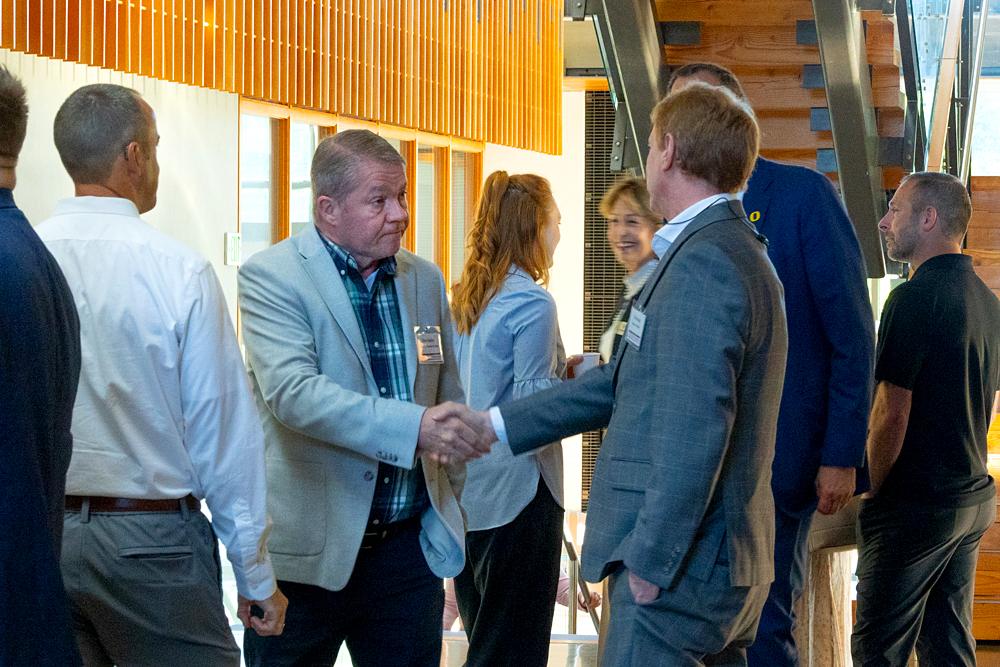
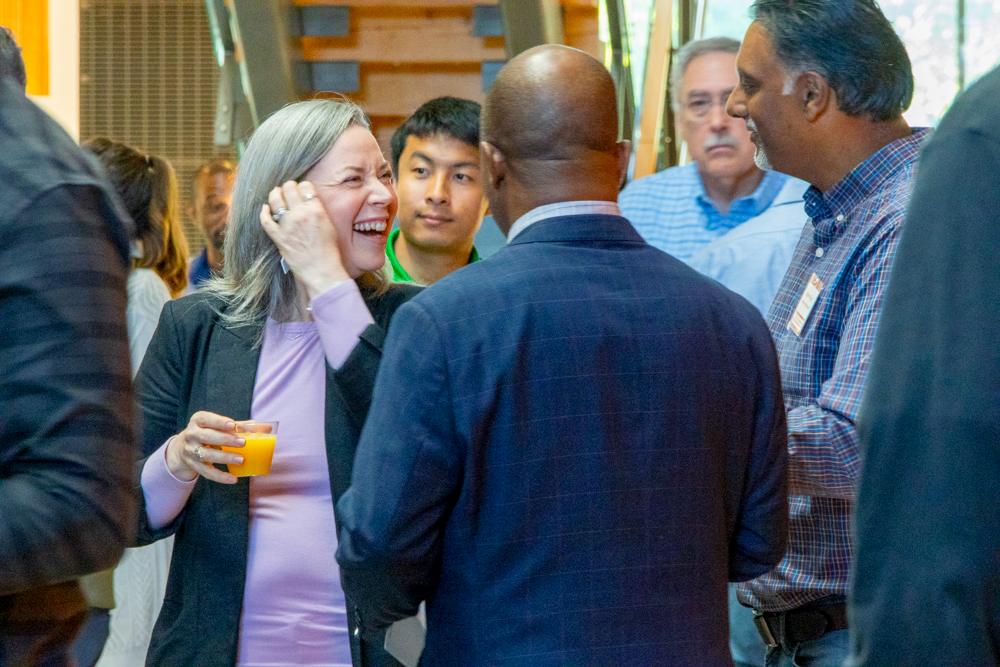
The energy was unmistakable as the Springfield Area Chamber of Commerce’s 2026 State of Business program kicked off at 7:00am on May 21st. Business leaders, nonprofit reps, and public sector officials packed the sun-drenched lobby of the University of Oregon‘s Ford Alumni Center for the networking portion of the program, connecting over coffee and pastries.
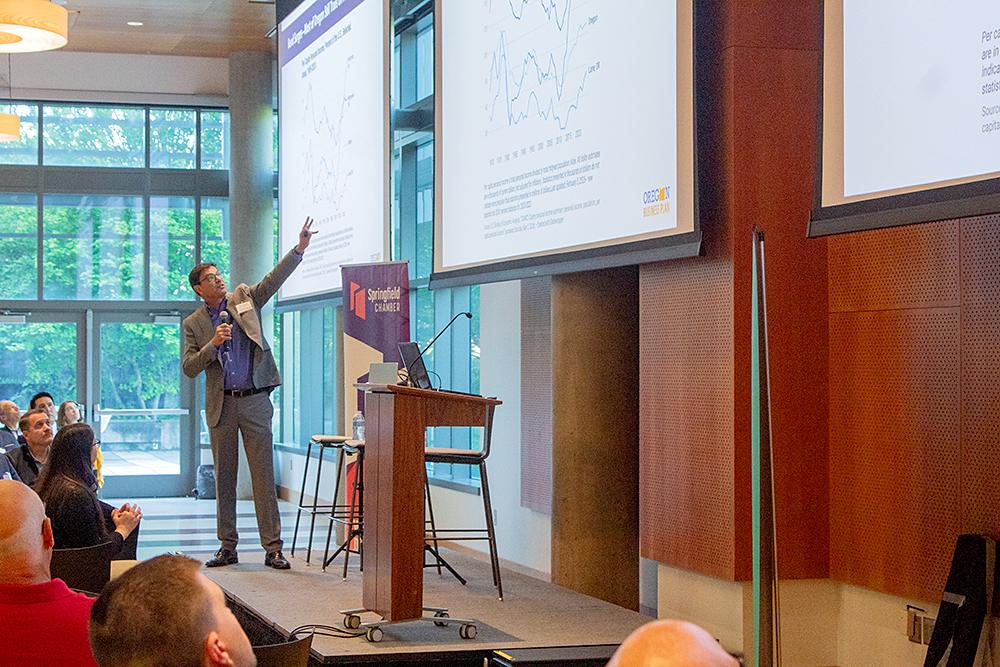
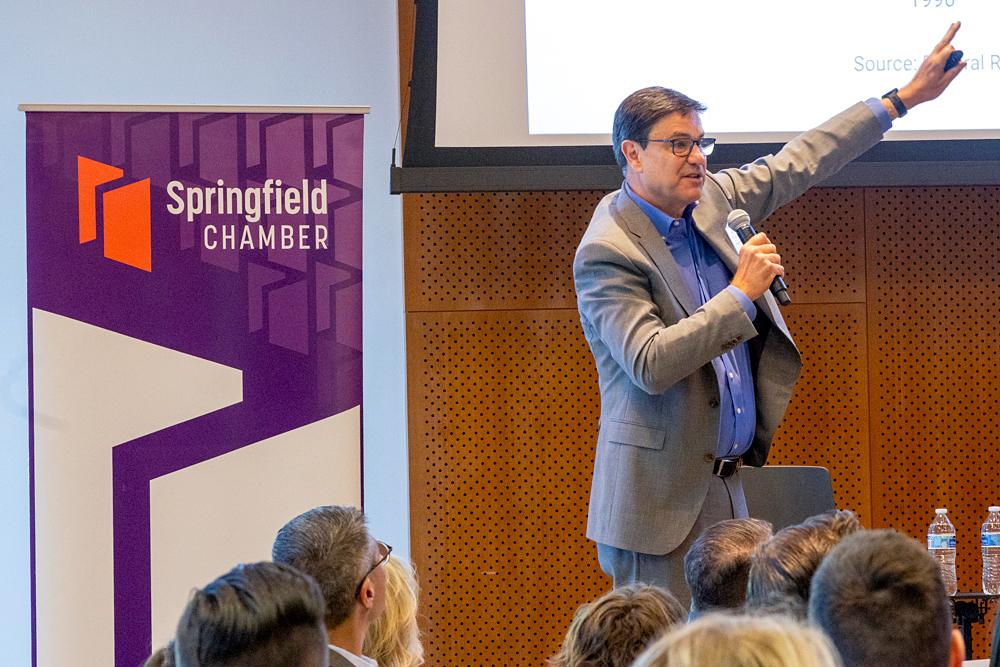
As nearly 200 people took their seats in the main room, Vonnie Mikkelsen, President and CEO of the Springfield Chamber, welcomed the attendees. Mikkelsen praised the program’s lineup of featured speakers and thanked the Chamber’s table sponsors; and after a few words from Charles Goldwait of PeaceHealth, the program’s title sponsor, Mikkelsen wasted no time in introducing keynote speaker John Tapogna, President of the Oregon Business Council, who delivered an economic overview of the state and region, along with national benchmarking.
“This region should be outperforming peer regions.”
– John Tapogna, President, Oregon Business Council
Oregon’s economic slowdown
John Tapogna opened with a sobering snapshot of Oregon’s economic performance, outlining how the state has fallen behind national GDP and job growth trends since the pandemic. Backed by insightful data (view Tapogna’s slides here), he pointed to employment declines in construction and manufacturing, while noting the healthcare sector has carried nearly all statewide job growth. Tapogna’s conclusion: Oregon’s economy is not growing in a healthy, diversified manner, and risks long-term stagnation if structural problems are not addressed.
Tapogna described Portland’s economic stagnation as a statewide concern, citing rising taxes, public safety issues, homelessness, and declining confidence in public services. He contrasted that with the potential of the Southern Willamette Valley, arguing that the region should be outperforming peer regions because of the presence of two major universities, combined with its livability and healthcare assets. He positioned the Springfield/Eugene area as uniquely capable of driving future statewide prosperity if collaboration and investment were aligned.
A new era of competition
There is a unique economic barrier for Oregon, Tapogna explained: that the state is entering a fundamentally different demographic, one defined by decreased population growth combined with increased competition for people and investment. Rather than relying on historic patterns of steady migration and growth, Oregon must now actively compete for businesses and workforce talent in a much more competitive national environment.
This is easier said than done, Tapogna said, and identified five major structural challenges facing Oregon:
- Housing affordability
- Underperforming K-12 education outcomes
- Tax competitiveness
- Restrictive regulatory and land-use systems
- Wildfire risk
He argued these issues collectively make it harder to attract investment, grow businesses, and create workforce housing, which increasingly affects competitiveness.
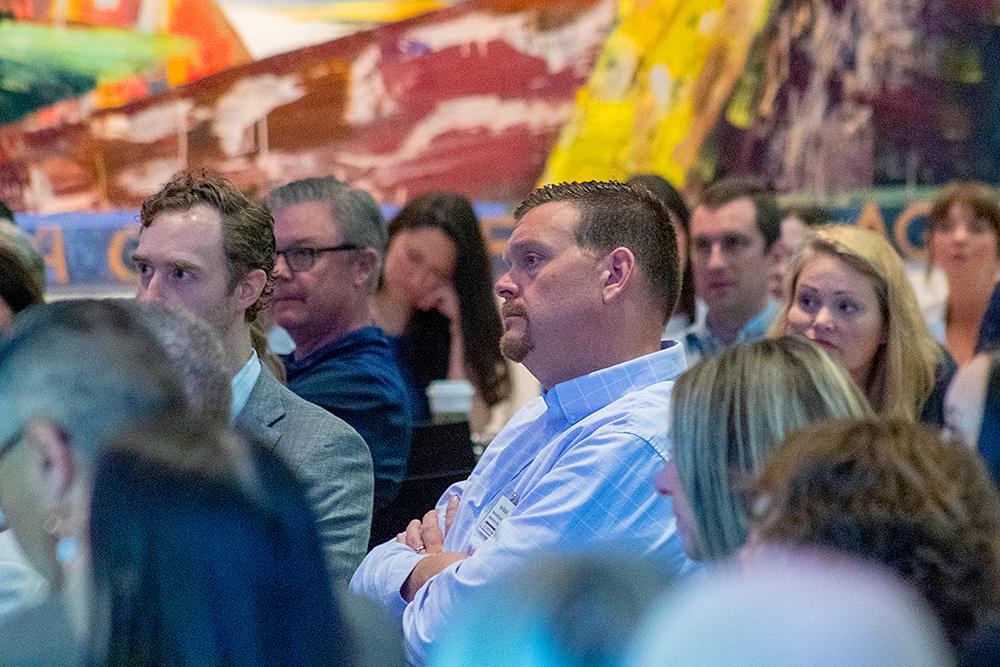
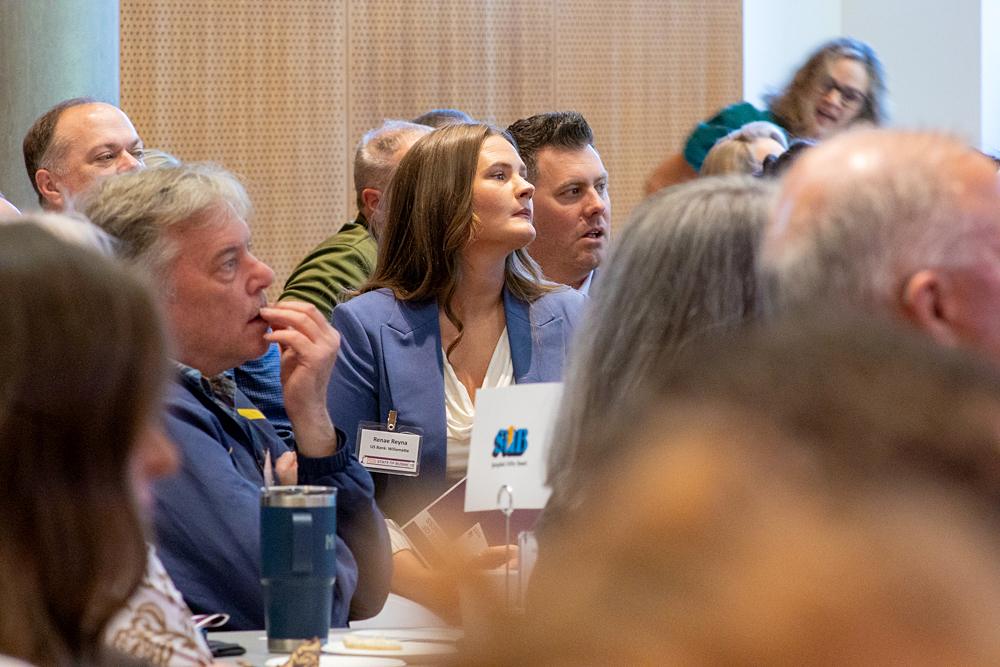
Closing his keynote, Tapogna argued that many of Oregon’s public systems were designed for the growth conditions of the 1970s and no longer fit today’s realities. He called for modernization of land-use policy, regulation, taxation, workforce development, and housing strategy, and ended on a cautiously optimistic note, pointing to the Southern Willamette Valley Innovation Corridor and the Governor’s Prosperity Council as examples of focused efforts on Oregon’s future competitiveness.
“We have these two really outstanding universities. We have a business community deeply invested in prosperity in the region. And we need to coordinate.”
– Karl Scholz, President, University of Oregon
A conversation about the future
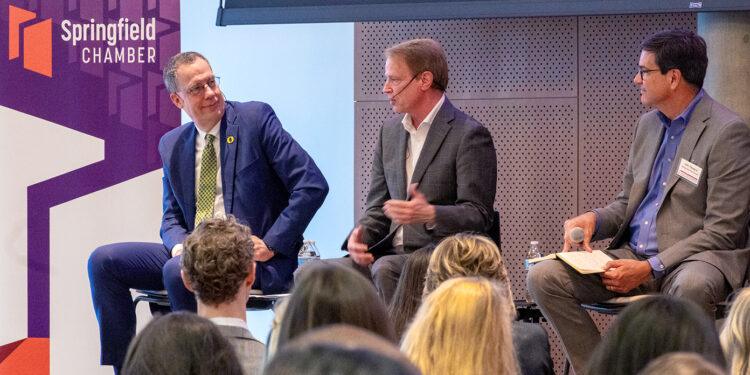
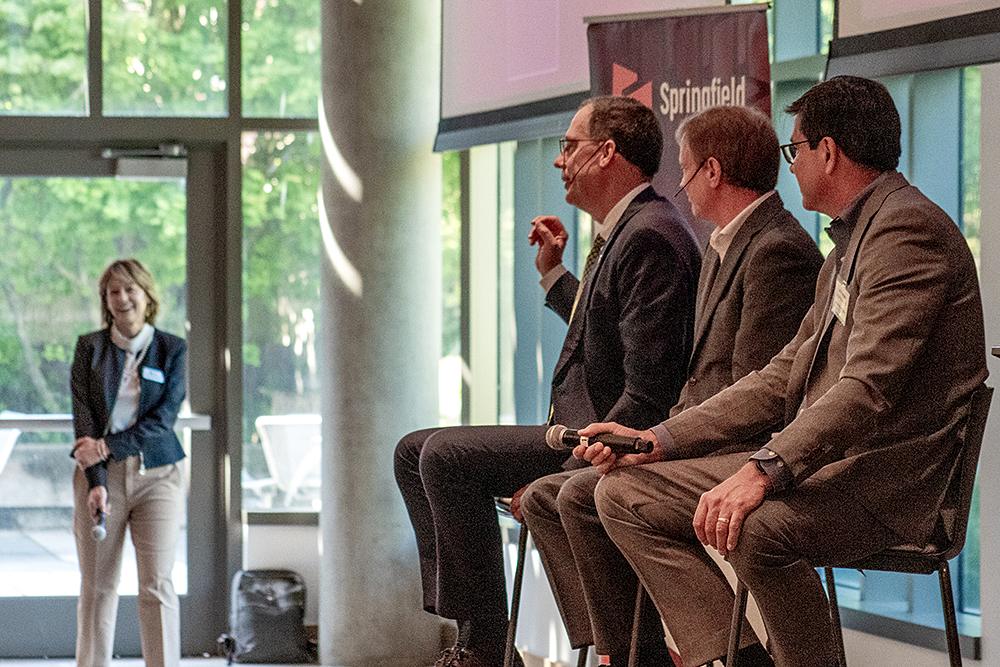
The program continued with Tapogna facilitating an open discussion with Tim Knopp, Governor Kotek’s Chief Prosperity Officer, and Karl Scholz, the President of the University of Oregon, shifting from economic diagnosis to innovation and long-term opportunity.
Karl Scholz argued that regions anchored by strong research universities consistently outperform economically, and predicted the Southern Willamette Valley has the ingredients to become a stronger statewide economic driver – if institutions, businesses, and local governments can work more collaboratively.
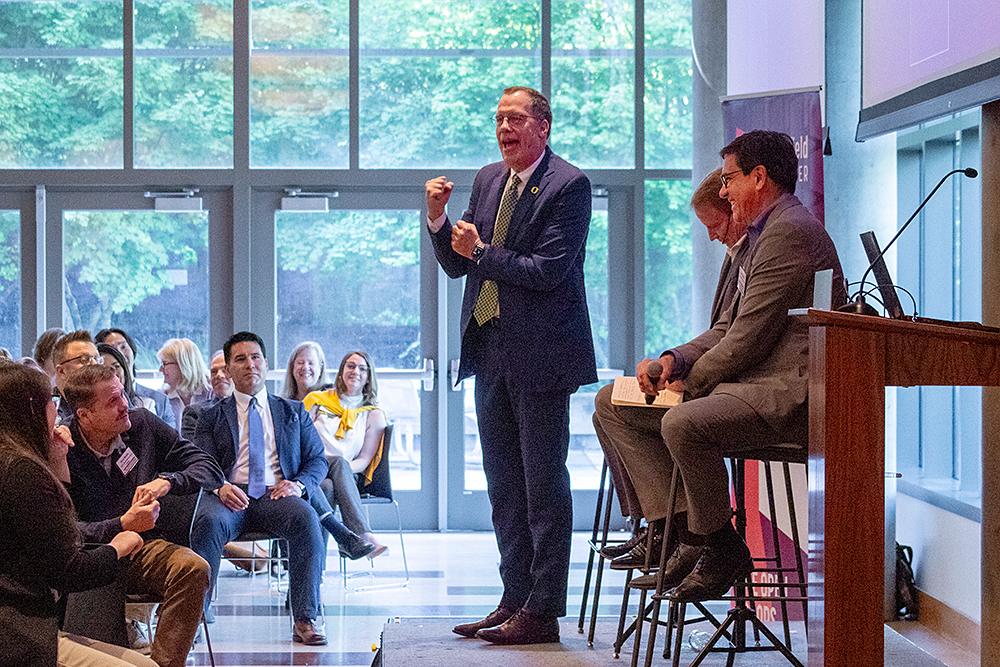
Tim Knopp echoed that message from a statewide perspective, describing Oregon as being in a critical window – and a tight one, at that – where policy decisions around taxation, regulation, permitting, and workforce development will determine whether the state can remain competitive for future investment.
“There is a window in time where Oregon has an opportunity to become one of the best economies in the United States.”
– Tim Knopp, Chief Prosperity Officer, Office of Governor Kotek
The region’s competitive advantages
Despite acknowledging Oregon’s economic challenges, both speakers emphasized that the state still holds significant advantages. The conversation highlighted Oregon’s quality of life, university system, semiconductor ecosystem, manufacturing base, and emerging sectors like bioscience, artificial intelligence, and renewable energy as areas with strong growth potential. Scholz also stressed the broader economic “multiplier effect” created by innovation industries, stating that growth in high-paying sectors ultimately supports local restaurants, nonprofits, retail businesses, housing demand, and community amenities across the region.
Q&A: local focus
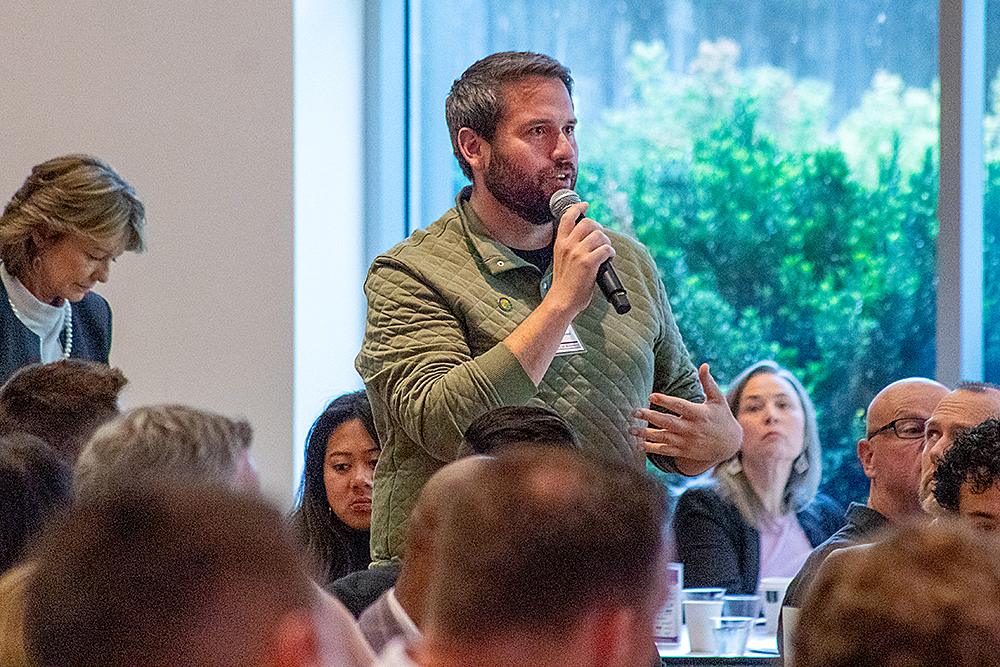
During an engaging Q&A session, audience questions brought the conversation closer to local priorities, with discussions focused on housing supply, permitting delays, infrastructure readiness, workforce shortages, and regional collaboration. Knopp repeatedly emphasized the need for government processes to move “at the speed of business” in order to keep pace with investment and technological change, while Scholz encouraged communities throughout the Southern Willamette Valley to view economic growth as a shared regional effort rather than a competition between neighboring cities. Together, the panel framed the region not simply as a participant in Oregon’s economy, but as a potential leader in shaping its future direction.
Collaboration, advocacy, and the role of the Chamber
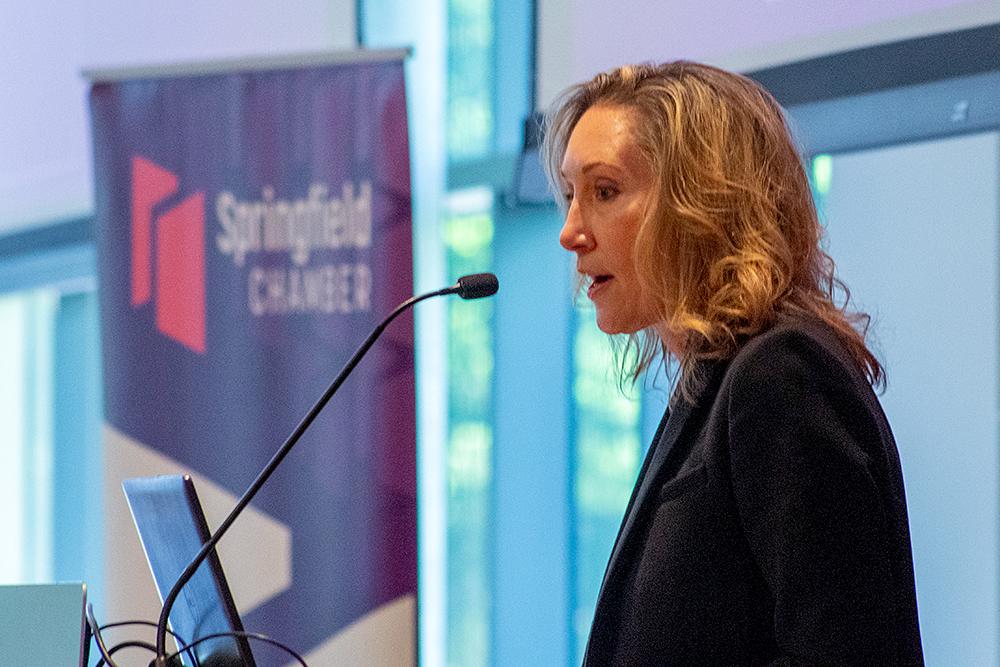
The program closed with remarks from Stacy Koos, Senior Vice President and Market Development Officer of Summit Bank and Board Chair of the Springfield Area Chamber of Commerce, who brought the morning’s broader economic conversation back to the roles of both the local business community and the Chamber. Koos encouraged businesses to stay engaged through Chamber programs, advocacy efforts, and the Business Climate Survey, while emphasizing that the Chamber’s mission-driven work is made possible through the support of the Springfield Chamber’s Impact Investors. As a representative of one of these Impact Investors, Summit Bank, Koos encouraged other business leaders to invest in the collaborative work shaping the region’s future.
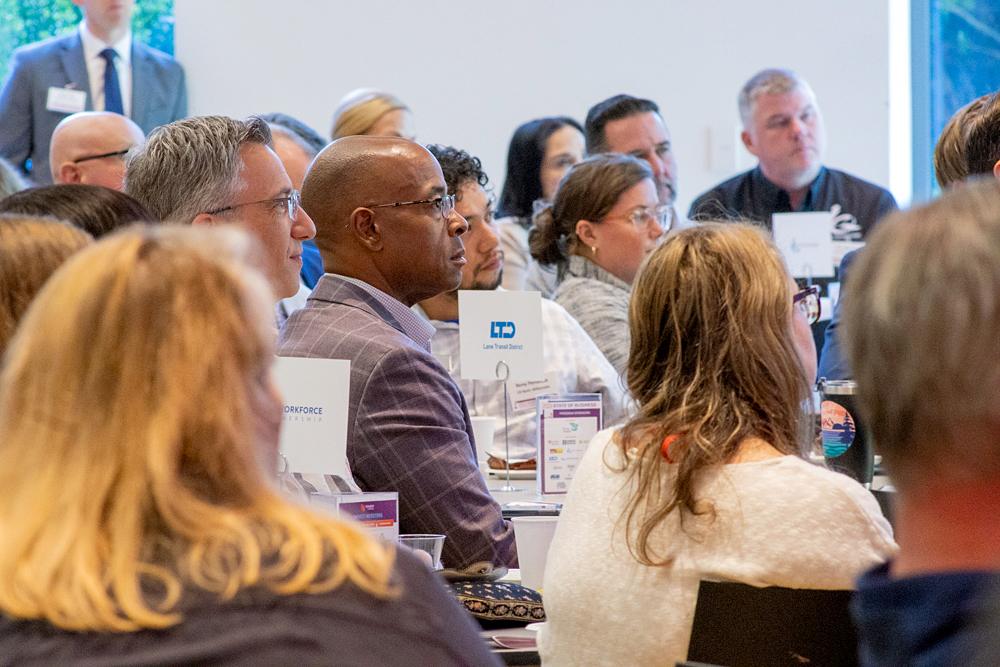
The Springfield Chamber would like to thank presenters John Tapogna, Karl Scholz, and Tim Knopp, for their time and insight; title sponsor PeaceHealth, the University of Oregon’s Ford Alumni Center staff; and our generous table sponsors: AIMS Mobile Nursing, Chambers Construction, Eugene Airport, Eugene Area Radio Stations (EARS), IEQ Technology, Lane County Community & Economic Development, Lane Transit District, Lane Workforce Partnership, NW Natural, Oakmont Family Dental, OCCU, Rise & Shine, Springfield Utility Board, Summit Bank, City of Springfield, Travel Lane County, and the University of Oregon. Thanks to Sheild Catering for providing refreshments.
Business owners and other organizational decision-makers are encouraged to participate in the Chamber’s annual Business Climate Survey, which only takes a few minutes and provides the Chamber with invaluable information about how businesses in the community are faring, what their major challenges are, and how we can support them.
More About the Springfield Chamber’s Business Advocacy Efforts
As a trusted convener and provider of business resources, the Springfield Chamber is committed to fostering policies and incentives that contribute to our competitive position in private sector job creation, retention, and economic growth. The Chamber recognizes the systemic interdependencies of a healthy economy and provides an ear and a voice for local business at the confluence of government, commerce, and community. Through a robust platform of member advocacy services, the Chamber advocates for business by increasing visibility, dialogue, and representation at local, state, and federal policy circles around issues of impact and interest to their members.
Discover more from Springfield Bottom Line
Subscribe to get the latest posts sent to your email.