Chamber Breaks Down Ballot Measures at Roundtable

As the May election fast approaches, the Springfield Area Chamber of Commerce hosted a Roundtable breaking down two proposals on the ballot: Lane County Ballot Measure 20-373 (Lane County Watersheds Bill of Rights) and the Willamalane Park and Recreation District’s proposed five-year local option levy.
Travel Lane County was the presenting sponsor for the Roundtable. This event included presentations by Vonnie Mikkelsen, President and CEO of the Springfield Chamber, and Michael Wargo, Executive Director of Willamalane Park and Recreation District. Following each presentation, audience members had the opportunity to ask questions and share comments.
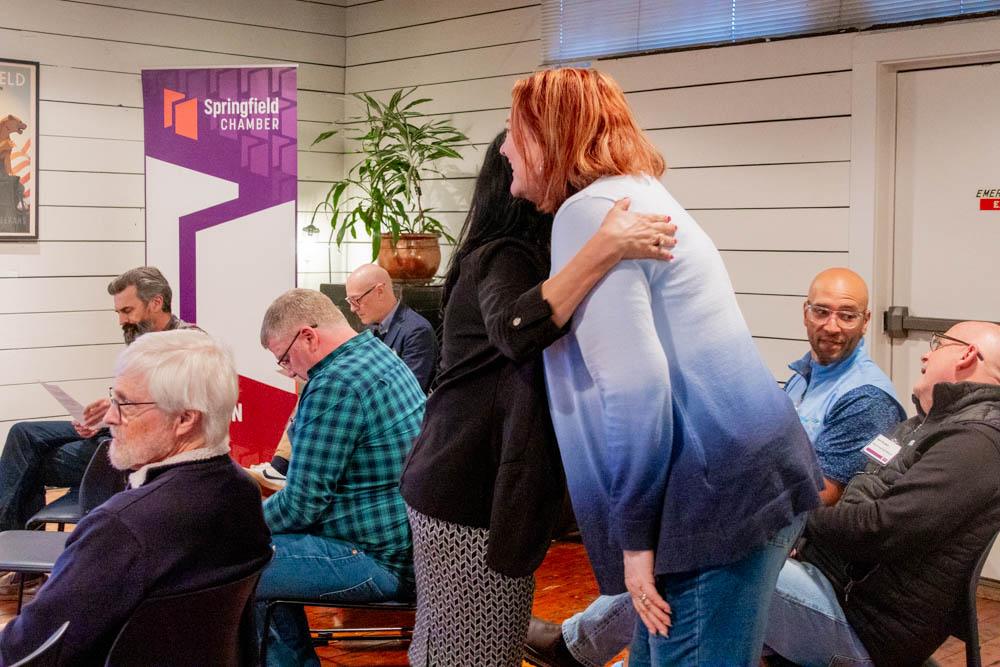
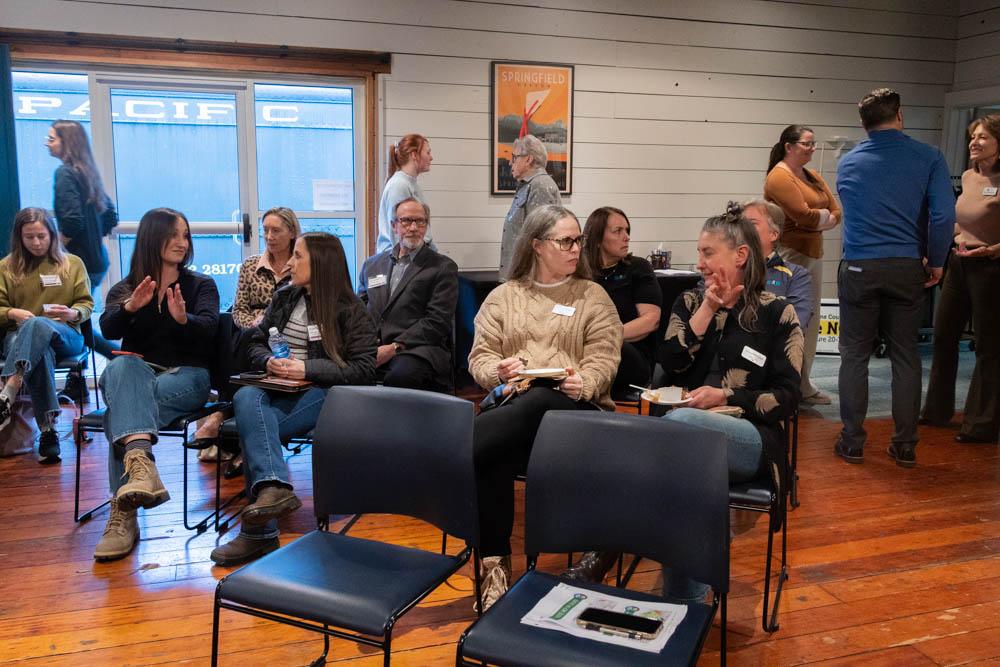

Measure 20-373: Watershed Bill of Rights
Vonnie Mikkelsen provided an overview of Lane County Ballot Measure 20-373, the “Watershed Bill of Rights.” She stated that, while the Springfield Chamber supports responsible environmental stewardship, they believe the measure is written too broadly and creates significant legal uncertainty for businesses, local governments, utilities, and community institutions across Lane County.
The Chamber is actively engaged in a growing coalition of individuals, businesses, and elected officials raising awareness about the measure’s risks and potential community impacts.
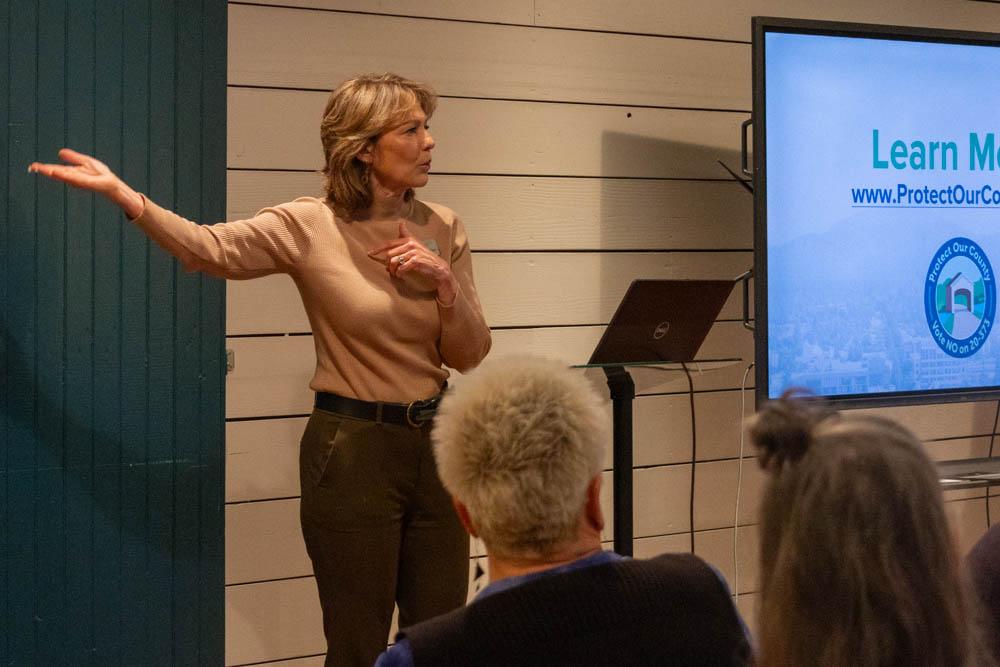
If passed, the measure would establish new legal rights for watersheds and allow individuals to file lawsuits on their behalf, including in response to routine, legally permitted activities. While the goal of protecting clean and sustainable water is widely shared, Mikkelsen emphasized that the Chamber’s concerns center on how the measure is written and the potential unintended consequences of its implementation.
The proposal introduces a new and broadly defined legal framework without clearly outlining how those rights would be interpreted, enforced, or aligned with existing environmental regulations. Oregon and federal laws already provide some of the strongest protections for water quality and watershed management in the nation, yet this measure is written to supersede those established systems.
Mikkelsen noted that the measure creates a broad private right of action without clearly defined standards. This lack of clarity lowers the threshold for legal challenges by allowing claims to be brought without clearly defined standards, including without scientific certainty or full evidence of risk.
She also highlighted the potential for widespread community impacts. Because nearly all land in Lane County exists within a watershed, the measure could affect routine, legally permitted activities across sectors such as housing, infrastructure, public services, healthcare, education, and small business operations.
“This isn’t somebody else’s problem, it’s all of our problem. The liability exposure doesn’t stop with one business or agency, those costs are ultimately passed on to taxpayers. The level of risk created by this measure is significant.”
– Vonnie Mikkelsen, President and CEO, Springfield Area Chamber of Commerce
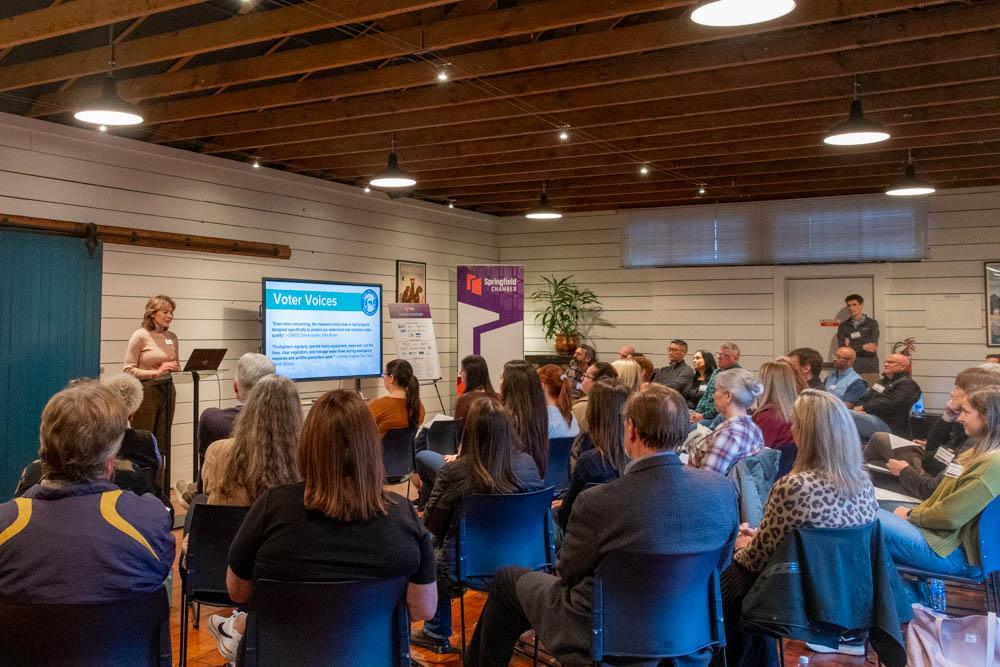
Mikkelsen concluded her presentation by sharing perspectives from voter statements submitted for the official voter pamphlet, highlighting concerns raised by a range of community voices. These included affordable housing developers such as DevNW, who noted the potential for projects to be delayed or challenged, and public safety leaders like former Eugene Fire Chief Randy Groves, who pointed to the legal risks the measure could create for wildfire response and emergency operations.
The Chamber’s position reflects a belief that environmental policy should be clear, science-based, and workable. While watershed protection is critical, Mikkelsen emphasized the importance of balancing that goal with other community priorities and ensuring policies deliver measurable outcomes without creating unintended risks or barriers.
Audience Q&A
Following Mikkelsen’s presentation, there was an open discussion led by audience questions, with a focus on the measure’s development and potential miscommunications in messaging. Measure 20-373 is a citizen-driven proposal that received petition signatures to have a spot on the ballot. Mikkelsen emphasized that an oppositional stance on the measure does not reflect an opposition to environmental protections.
Willamalane Park and Recreation District five-year local option levy
Michael Wargo outlined the Willamalane Park and Recreation District’s proposed five-year local option levy, providing context for the District’s current financial status and how the community would benefit from the temporary levy funding.
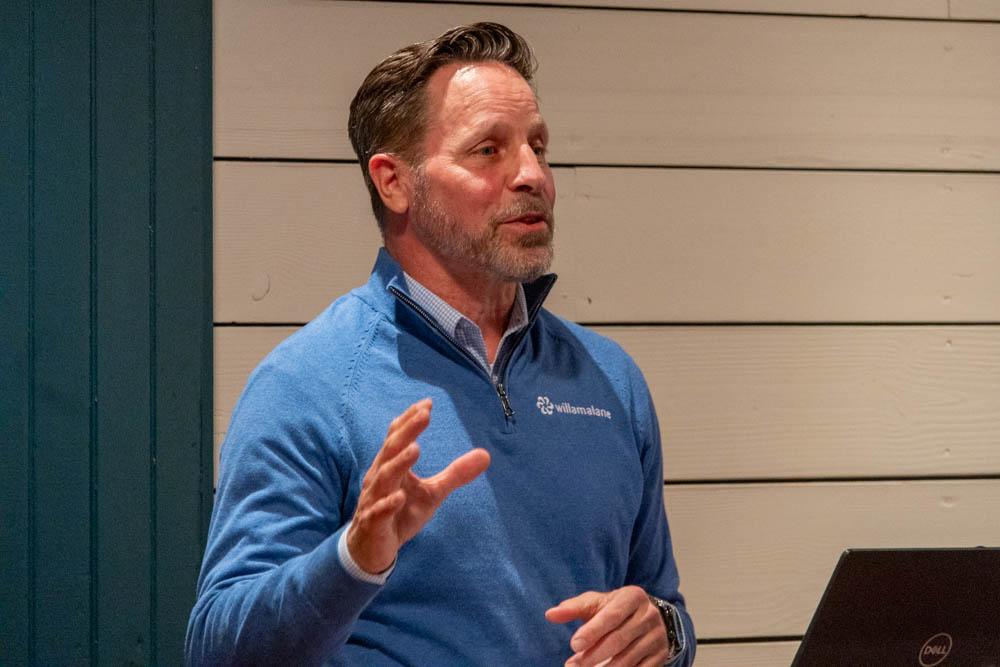
Currently, Willamalane operates over 45 parks, 1,500 acres of natural areas, and 500 recreational programs. The District supports operations through several funding sources, including the permanent property tax, revenue from programming, and fundraising.
Tax funding is essential to supporting the District, accounting for 65% of Willamalane’s operating budget. The District’s current property tax rate of approximately $2.00 per $1,000 on assessed property value, has been in place since 1997. Assessed property values are capped at 3% annually per state statute.

To maintain current operations, Wargo cited a need for additional funding to address financial challenges. Current issues include expenses outpacing revenue, labor and maintenance costs, and environmental damage recovery. Willamalane has taken measures to manage the District’s financial situation, such as reducing the operating budget, restructuring staffing, and increasing fundraising and development efforts.
The five-year local option levy would support the District’s current budgetary approach through a 25 cent per $1,000 of assessed property value tax — about $49.20 per year — for the average Springfield homeowner. With the levy, Willamalane would collect about $8.5 million over five years.
“We love what we do. Our community appreciates what we do, but we want to just maintain the level at which we’re doing it right now.”
– Michael Wargo, Executive Director, Willamalane Park and Recreation District
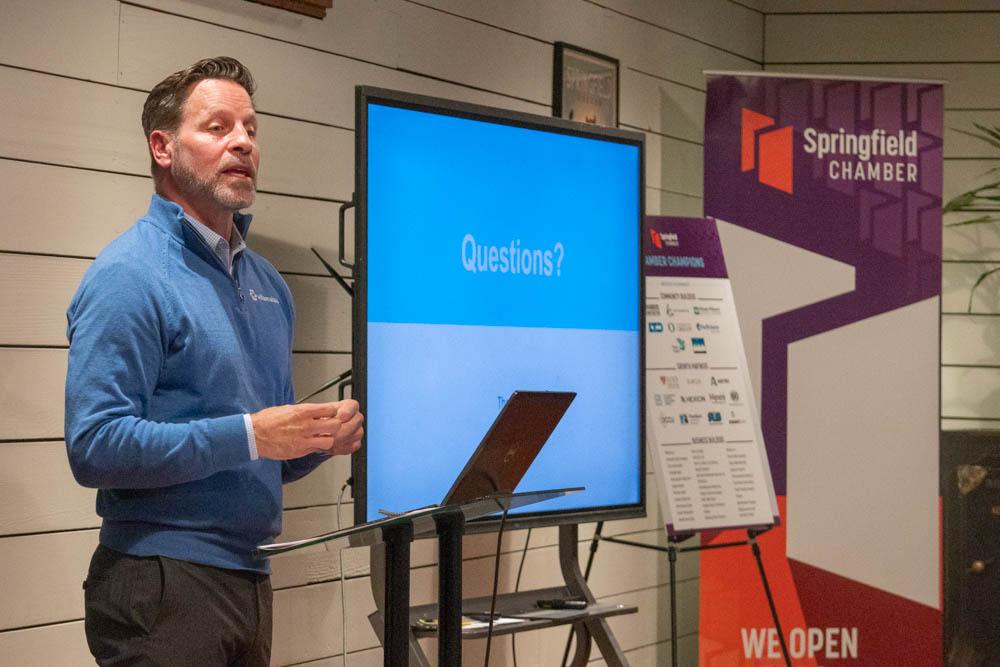
Wargo noted how impactful the levy would be for Willamalane. The funding would help the District maintain current park and recreation operations, such as through supporting programming needs and wildlife prevention efforts.
Audience Q&A
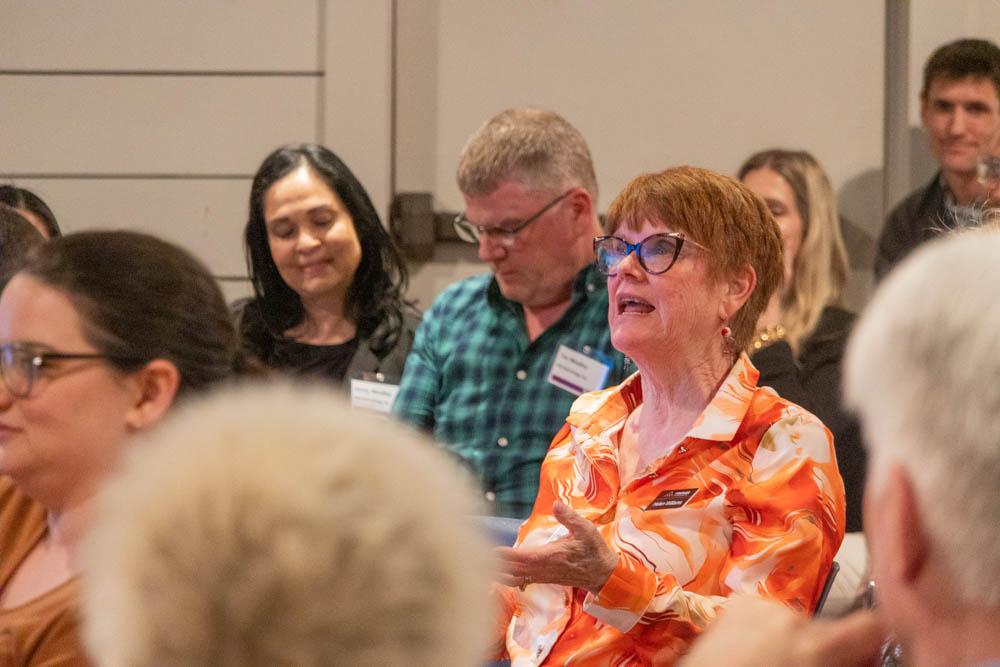
Wargo’s presentation was followed by a Q&A session, featuring questions on plans with funding from the proposed levy. Willamalane does not plan on requesting an additional temporary levy in five years, as the district would use the proposed levy to create new revenue opportunities. Wargo explained that the temporary levy would support current maintenance and programming needs, rather than new facilities.

Thank you to our sponsors and supporters
The Springfield Chamber thanks Travel Lane County, our presenting sponsor, and our Impact Investors for supporting Chamber Roundtable and Roundtable + Tour programs, year-round. For the language of Ballot Measure 20-373, please visit the Oregon Secretary of State’s online voter’s pamphlet and click through to BM 20-373 in the sidebar. For more information on the coalition to vote no, please visit protectourcounty.org. Learn more about Willamalane’s proposed five-year local option levy here. Want to stay in the loop on advocacy and the May election? Keep an eye out for Chamber communications and upcoming Roundtables.
Discover more from Springfield Bottom Line
Subscribe to get the latest posts sent to your email.