Budget Forecast + Payroll Tax are the Focus of the Chamber’s April Roundtable
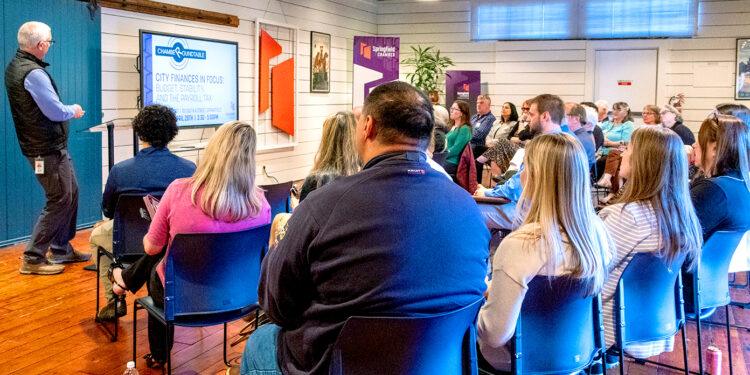
The City of Springfield is in the midst of an important and ongoing conversation – what it will take to ensure fiscal stability while maintaining essential services. The Springfield Area Chamber of Commerce has been hosting conversations, offering perspectives, and submitting testimony for the past year and a half. On Tuesday, they brought together business and community leaders for a much-anticipated Roundtable conversation on Springfield’s financial outlook, as well as the proposed payroll tax currently under consideration by Springfield City Council.
With the City’s budget committee discussion taking place in May and the next payroll tax public hearing in early June, the Springfield Chamber timed this Roundtable to provide members with a chance to weigh in on issues regarding Springfield’s fiscal future.
Springfield’s budget forecast
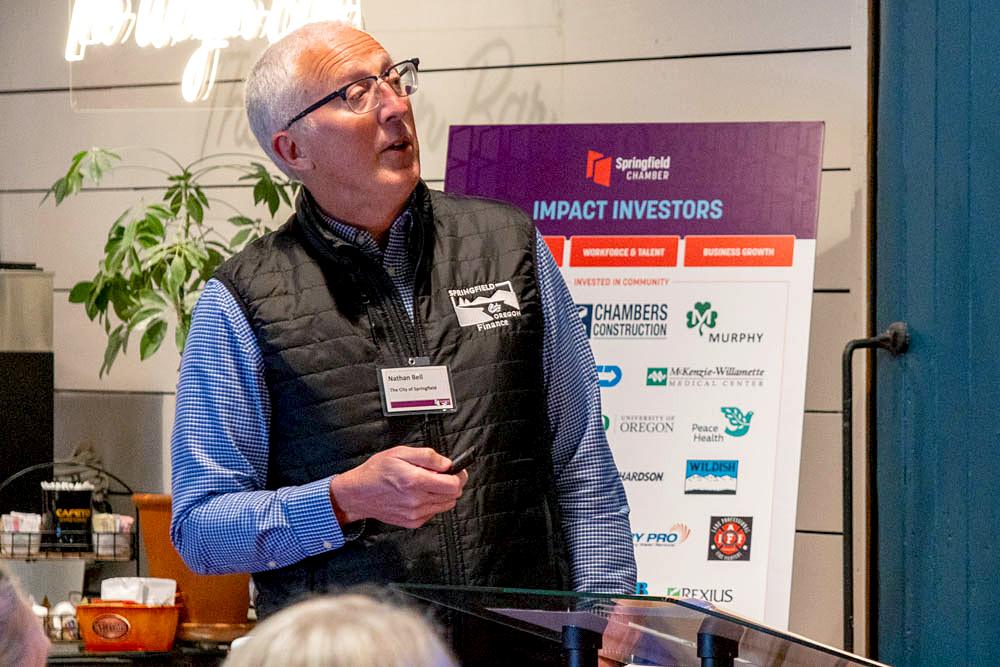
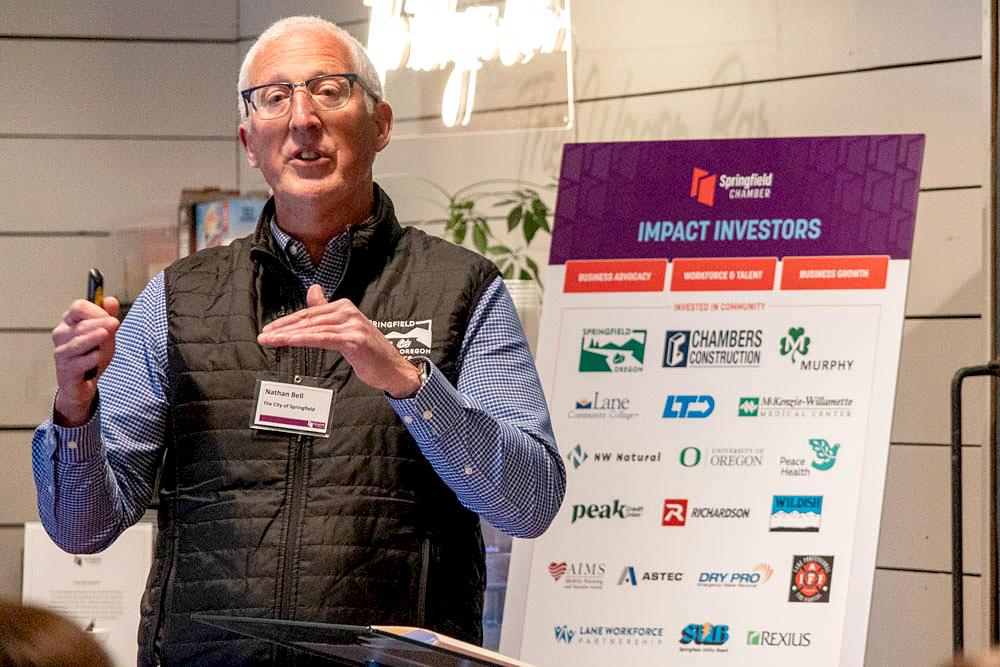
After opening remarks from the Chamber and title sponsor Travel Lane County, the City of Springfield’s Finance & IT Director, Nathan Bell, presented a clear, data-driven overview of the City’s budget forecast and the structural challenges behind it. At the center of this overview was an unsurprising and long-standing imbalance between revenue and costs in Springfield. While property taxes remain the City’s primary funding source, said Bell, their growth is limited; and expenses continue to rise.
“We’ve been living this challenge for decades, and we’re at the point of looking at a solution … to maintain current service levels while we work toward longer-term solutions, like economic development.”
– Nathan Bell, Finance & IT Director, City of Springfield
According to Bell, with a General Fund of approximately $50 million, and the majority of spending dedicated to public safety, the City of Springfield has already taken steps to reduce costs, streamline operations, and identify new revenue sources; and despite those efforts, there are still projected deficits. This was the driving force behind Springfield Mayor Sean VanGordon’s Fiscal Stability Task Force, convened January 2025, to analyze the city’s fiscal health and recommend solutions, one of which was the concept of a payroll tax. View the Task Force’s report from May 2025 here.
The proposed payroll tax
Addressing a full room at the Chamber Depot, Bell touched on broader financial pressures facing the city: deferred maintenance, infrastructure needs, and the long-term constraints of Oregon’s property tax system are making it difficult to maintain sustained fiscal balance in Springfield. He went on to outline the proposed payroll tax: a 0.1% employer and 0.1% employee model, projected to generate about $2.45 million in the first year. The draft ordinance includes built-in guardrails aligned with the principles the Chamber identified as necessary to support a payroll tax, emphasizing simplicity, transparency, and trust:
- Rate established by Council-adopted ordinance
- No rate increases or structural changes for three years
- Required annual reporting to Council and public
- Revenues budgeted and accounted for in a separate fund
- Formal program review after year three
Bell averred that the payroll tax is not intended to be a permanent fix. While the additional revenue could help stabilize the budget in the short term, long-term projections show deficits returning without additional action.
The Chamber’s position
Paige Walters, Senior Director of Advocacy & Economic Development at the Springfield Chamber, acknowledged the range of perspectives within the business community when it comes to the payroll tax. Walters reiterated the Chamber’s position in support of a 0.1% employer and 0.1% employee payroll tax structure, paired with strong guardrails, a rate the Chamber has consistently emphasized as a measured approach to addressing near-term fiscal needs.
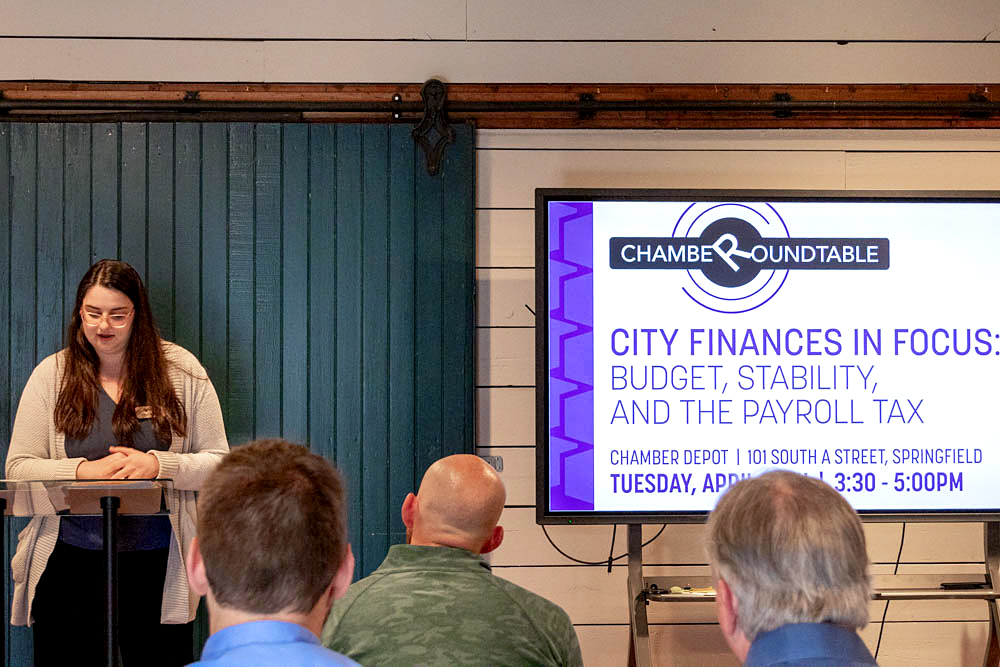

Walters noted that the Chamber also submitted testimony to the Mayor and Council at the first public hearing on April 20th of this year, emphasizing once again that a payroll tax, even with the aforementioned guardrails, must be “paired with a sustained focus on long-term economic growth.” An excerpt from that testimony reads:
Businesses in Springfield are navigating a layered and growing cost environment, including local, state, and federal taxes, fees, regulatory requirements, wage pressures, and inflation. Within that context, even modest cost increases matter, particularly for small businesses operating on narrow margins. Any new tax must be considered carefully to avoid unintended consequences such as reduced investment, slower job growth, or missed opportunities for new business, housing, and redevelopment.
We have heard directly from our members that both the tax itself and its administrative requirements will affect their bottom line, with downstream impacts on hiring, wages, and benefits.
Long-term fiscal stability will depend on expanding Springfield’s economic base – supporting business investment, facilitating job creation, and ensuring the City remains competitive in attracting and retaining employers. A strong and growing economy increases overall revenue and reduces reliance on additional or expanded tax mechanisms over time.
View the Chamber’s full testimony here
“The Chamber’s position is grounded in balance. The City must fund essential services that support a strong community and business environment, while also maintaining the conditions necessary for businesses to grow, invest, and create jobs. Long-term fiscal stability depends on both.”
– Paige Walters, Senior Director of Advocacy & Economic Development, Springfield Area Chamber of Commerce
Q&A Session
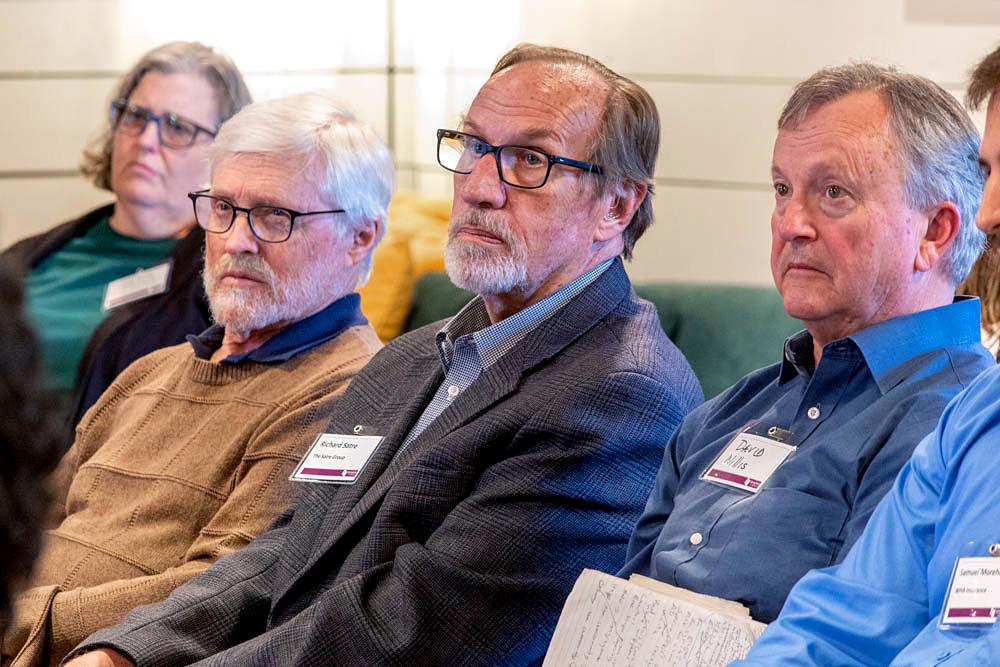
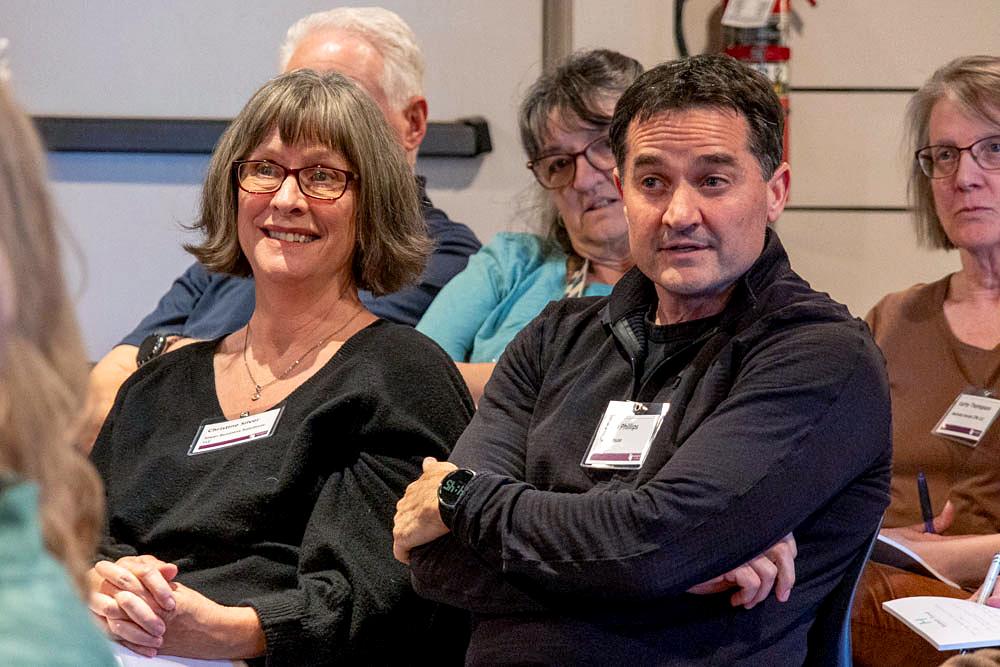
A robust Q&A followed Bell’s presentation, with Springfield business owners offering concerns about the long-term sustainability of the City’s financial plan, the potential for future tax increases or surpluses, who bears the burden of the payroll tax, the cost and complexity of implementation, lessons learned from other cities (namely, Eugene and Salem), and what alternative revenue options had been considered.

The Chamber continues to engage on this issue, recognizing that long-term economic vitality depends on a stable and sustainable fiscal foundation. As the City moves forward with Council deliberations, business leaders are encouraged to stay informed and participate in the process.
Upcoming important dates:
May 4–6 | 5:30pm. City of Springfield Budget Committee meetings
June 1 | 7:00pm. City Council Regular Session: Public Hearing and Potential Adoption of Payroll Tax
Additional links from The Bottom Line:
City of Springfield Publishes FY27 Proposed Budget, Invites Public Review and Participation (4/21/26)
Payroll Tax Conversation Continues in Springfield (4/3/26)
Springfield Payroll Tax Work Moves Forward, Chamber Offers Perspective (12/9/25)
Advocacy in Action: Chamber Offers Perspective on City of Springfield Fiscal Strategy (12/4/25)
Springfield’s Fiscal Future: A Roundtable Conversation with the Mayor (7/28/25)
More About the Springfield Chamber’s Business Advocacy Efforts
As a trusted convener and provider of business resources, the Springfield Chamber is committed to fostering policies and incentives that contribute to our competitive position in private sector job creation, retention, and economic growth. The Chamber recognizes the systemic interdependencies of a healthy economy and provides an ear and a voice for local business at the confluence of government, commerce, and community. Through a robust platform of member advocacy services, the Chamber advocates for business by increasing visibility, dialogue, and representation at local, state, and federal policy circles around issues of impact and interest to their members.
Discover more from Springfield Bottom Line
Subscribe to get the latest posts sent to your email.