Member Profile: Veterans Legacy at Camp Alma
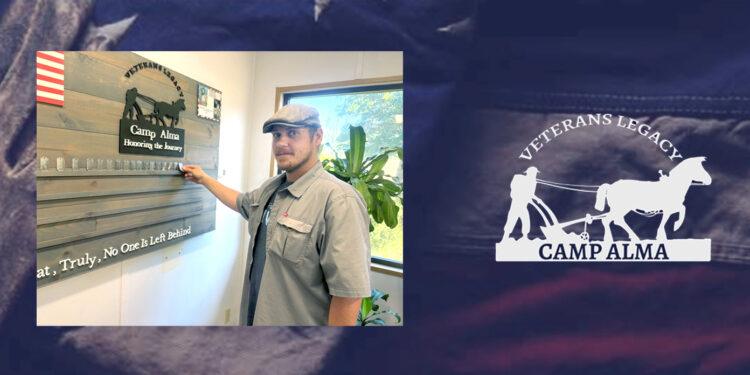
Veterans Legacy is a 501(c)(3) nonprofit organization founded in 2016 to address homelessness, justice involvement, and reintegration challenges facing veterans in Lane County. The Springfield Chamber spoke with Phil Highwood, Executive Director at Veterans Legacy, for more information about this organization and its important mission.
Tell us a little about Veterans Legacy at Camp Alma.
The organization was established to repurpose the former Lane County Sheriff’s Forest Inmate Camp, a decommissioned minimum-security facility located southwest of Eugene, into a structured residential wellness campus serving veterans in crisis. In 2018, recognizing the long-term value of the program, the Lane County Board of Commissioners deeded the property to Veterans Legacy, ensuring long-term stability. The campus was subsequently renamed Camp Alma, honoring one of the area’s earliest settlers and reflecting its renewed mission of restoration and service.
“Veterans Legacy provides a structured environment where veterans can stabilize, rebuild, and move forward with dignity. Our mission is simple: provide hope, structure, and a pathway forward for those who once stood in defense of our nation.”
– Phil Highwood, Executive Director, Veterans Legacy at Camp Alma
What services do you offer and what makes Veterans Legacy different?
Camp Alma operates as a 20-bed residential stabilization campus providing no-cost housing and comprehensive care coordination to veterans experiencing homelessness, PTSD, traumatic brain injury (TBI), substance use challenges, and other barriers to reintegration. Over the past five years, Veterans Legacy has supported veterans in transitioning from instability to community. We focus on foundational stability before long-term reintegration. Services include safe and secure housing, food and basic necessities, transportation to appointments, coordination of medical, dental, and behavioral health services, assistance with benefits and identification, and support in securing permanent housing.
A distinguishing feature of the program is the employment of veterans as Peer Mentors, offering structured support, goal setting, and lived-experience guidance. Each resident receives an individualized Plan of Care developed by staff and aligned, when applicable, with court-mandated requirements. While clinical services are delivered by community partners, Veterans Legacy provides coordination, accountability, and follow-through.
What do you like most about your work?
As a veteran, and as someone from a family deeply rooted in military service, including my son, this mission is profoundly personal. Supporting those who volunteered to defend our freedoms is both an honor and a responsibility. My commitment centers on providing veterans with hope for the future and guiding them through a reintegration process many have had to navigate without sufficient structure or support.
Any advice for others?
It’s important to understand that, for those who have deployed, the most difficult transition is often not combat itself, but the return home. Not all veterans have served in combat; however, all have experienced the pressures of military training and culture. For some, a single incident can permanently alter the trajectory of their lives.
Service members are rarely trained for the emotional, relational, and systemic challenges of reintegration, including changes within family dynamics, navigating healthcare systems, and adjusting to civilian expectations.
Anything else you’d like to share?
Reintegration manifests differently for each veteran. For some, substance use becomes a coping mechanism that can evolve into dependency. For others, isolation or avoidance may serve as self-protective behaviors. Others continue forward while managing daily stressors and adapting to civilian life.
Veterans Legacy provides a structured environment where veterans can stabilize, rebuild, and move forward with dignity. Our mission is simple: provide hope, structure, and a pathway forward for those who once stood in defense of our nation.
More about Veterans Legacy – Camp Alma
Camp Alma addresses the critical reintegration gap by offering a stable, rural therapeutic environment where Veterans can reset, rebuild, and move forward with dignity. With sustained funding and strategic partnerships, Veterans Legacy seeks to maintain full residential capacity, expand peer mentorship programming, strengthen housing placement outcomes, and increase long-term reintegration success rates.
Discover more from Springfield Bottom Line
Subscribe to get the latest posts sent to your email.