Small Business Solutions Hub overviews workplace safety
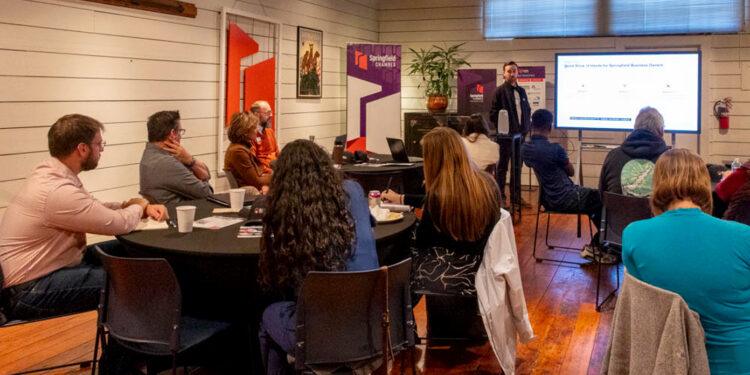
From natural disasters to confrontations, emergency planning helps businesses prepare for a range of unexpected events. This topic was central to the Springfield Area Chamber of Commerce‘s recent Small Business Solutions Hub, Safety at Work: Protect Your People and Your Business, which focused on how employers can plan ahead to keep the workplace safe.
Small Business Solutions Hub began with a networking lunch sponsored by Industrial Source. During the educational segment of the program, Joshua Parrett, Division Manager at National Extinguisher Service, and Leigh Manning, Senior Safety Management Consultant at SAIF, shared presentations on preparing for workplace emergencies. Both speakers highlighted key information and resources that attendees can use to enhance existing workplace safety measures.
Fire Protection
Parrett provided an overview of essential fire safety practices that can be applied to any business and key considerations for specific industries. He prefaced that employers and employees should know where fire extinguishers and inspection records are located, as well as how to operate the safety device.

To prepare for fires in the workplace, Parrett emphasized the importance of having a functioning, accessible fire extinguisher. He discussed how regular extinguisher inspections and maintenance keep the safety device ready for use, noting that specific requirements vary by extinguisher type. He also recommended having extinguishers mounted off the ground and readily accessible in the event of an emergency.
“In terms of the actual act of fighting fires, it’s completely dependent on the company, the policy you have, and what you’re comfortable with. For anything beyond a waste high fire, your best action is to get out and call the local fire department. We’re not licensed firefighters, and fires are unpredictable.”
– Joshua Parrett, Division Manager, National Extinguisher Service
Parrett discussed that every industry has different fire hazards, so businesses should identify safety equipment that address their specific needs. For example, medical facilities use water mist extinguishers to prevent electrical or equipment damage, while airports use potassium bicarbonate extinguishers to address jet fuel fires.
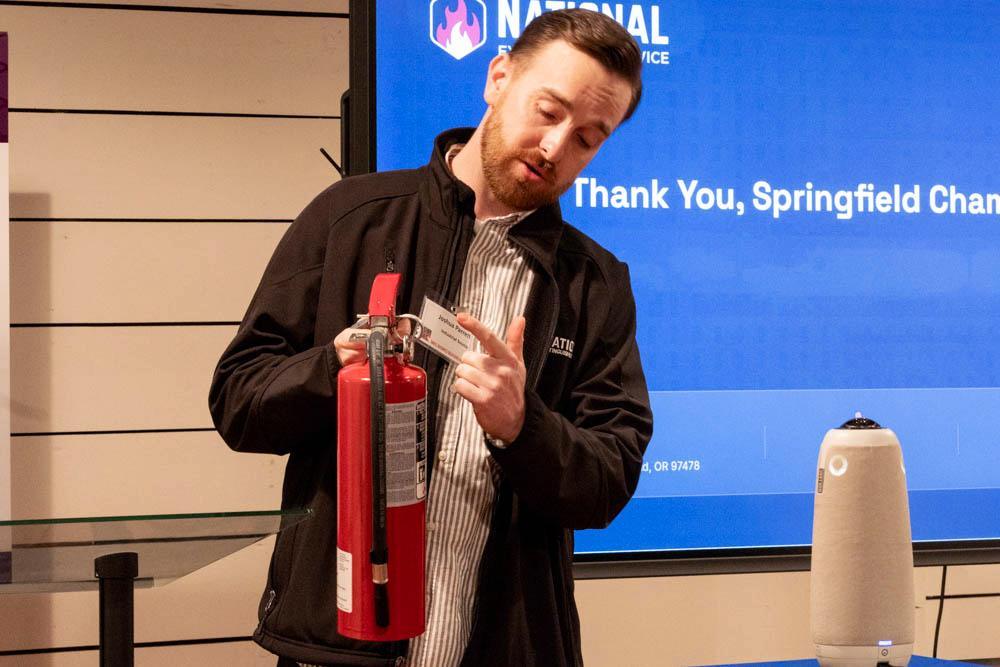

He also noted the value of fire extinguisher training across all sectors. The PASS method is a helpful acronym that overviews how to use a fire extinguisher.
P– Pull the safety pin.
A-Aim at the base of the fire.
S– Squeeze the handle.
S– Sweep from side to side.
Parrett explained that, by conducting training on the PASS method, businesses can prepare employees to operate a fire extinguisher in emergency situations.
Workplace Safety Requirements and Resources
Following this, Manning presented on workplace safety mandates and tools, focusing on how employers can abide by Oregon Occupational Safety and Health Division 1 rules. All workplaces must properly instruct and supervise employees, inform them about hazards in the workplace, and take reasonable means and measures to protect them. To meet these expectations, Manning outlined three key requirements that businesses must follow.

First, Manning discussed that businesses should have a safety committee or safety meetings, with OSHA requirements varying based on the industry and business. In general, businesses with more than 10 employees are required to have a safety committee, while businesses with 10 or fewer employees can have safety meetings with workers. The required frequency of safety meetings is dependent on the industry.
“We often say in safety and health that the rules are written in blood, and that is not wrong. Most of the rules that govern our workplaces in regards to safety and health are in place because somebody was lost their life or was very severely injured.”
– Leigh Manning, Senior Safety Management Consultant, SAIF
Manning also noted that, following a workplace injury that results in an employee losing time, businesses are required to investigate. This entails conducting an accident analysis to identify what caused the incident, which can then be reviewed by a safety committee or at a safety meeting to determine recommendations to prevent future issues.
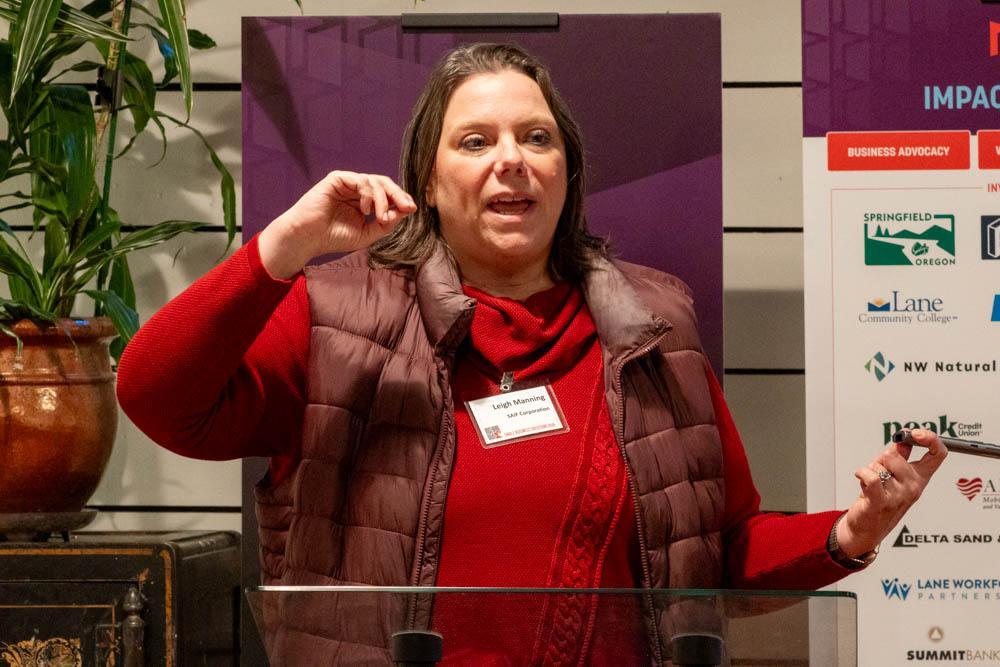
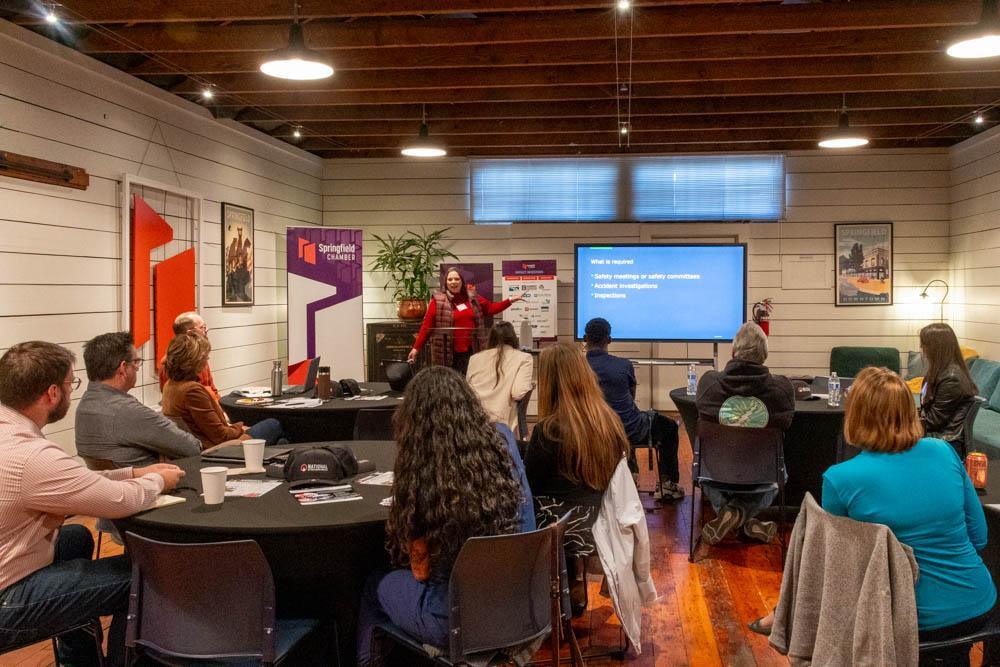
A final requirement outlined by Manning is hazard identification and control. By establishing a hazard inspection procedure and conducting inspections, businesses can identify potential hazards and take action before they result in emergency situations.
Conclusion
Both presenters emphasized the importance of preparing for emergencies with regular training and support from safety professionals. By taking proactive measures, employers can plan ahead for emergency situations and keep the community safe.
Thank you to the event sponsors!
Small Business Solutions Hub is a free event series offered to members thanks to the generous support of Chamber sponsors and community partners. Thank you to the title sponsor, Kaiser Permanente, and to the lunch sponsor, Industrial Source. Additionally, thank you to the Small Business Solutions Hub partners: Chambers Construction, Eugene Area Radio Stations (EARS), Hershner Hunter LLP, Insights Research Lab, Isler CPA, OCCU, Springfield Utility Board, The Nerd Stuff, and WaFd Bank.
The full recording, “Small Business Solutions Hub – Protect Your People and Your Business,” is available below and in the Chamber’s Small Business Solutions Hub program archive.
Discover more from Springfield Bottom Line
Subscribe to get the latest posts sent to your email.