City plants 500 native trees and shrubs at Mill Race stormwater pond
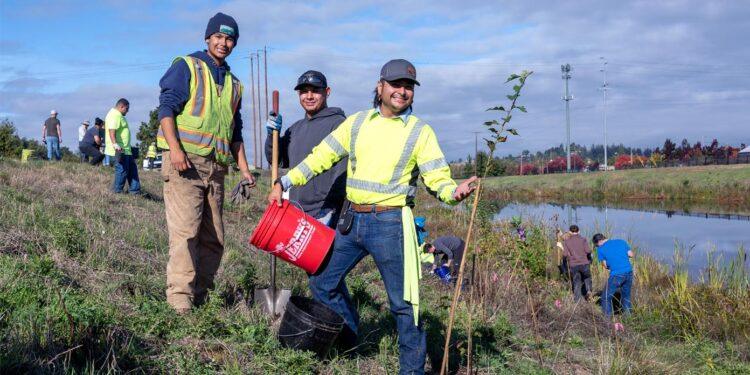
The City of Springfield planted 500 native trees and shrubs on September 30 at the Mill Race stormwater treatment pond to improve water quality, provide shade, and create habitat for wildlife near Downtown Springfield.
The planting focused on the south side of the pond, where the new vegetation will provide shade over the water as it grows. Shade keeps water temperatures low, which benefits fish and aquatic life. Plants also stabilize the pond’s bank and provide food and shelter for wildlife.
Plants are part of the stormwater treatment system
The Mill Race stormwater treatment pond receives stormwater from 117 acres of commercial and industrial properties south of Main Street. As stormwater flows over hard surfaces, it picks up bacteria, oil, litter, sediment, and other pollutants, and carries them to rivers and streams. The pond helps clean that stormwater before it flows into Springfield’s Mill Race and downstream to the Willamette River.
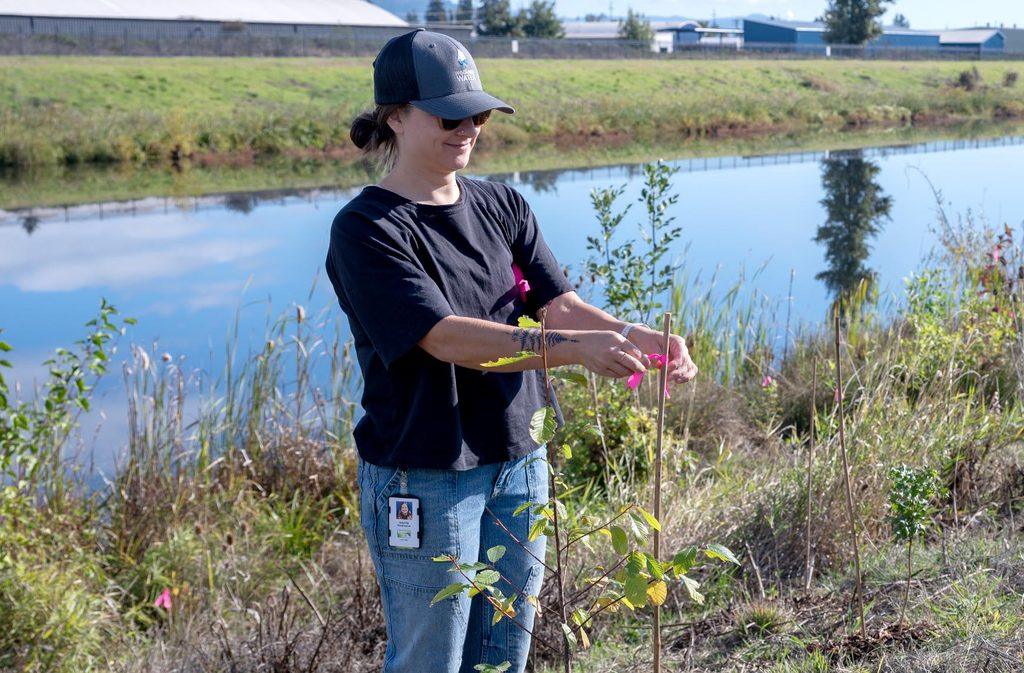
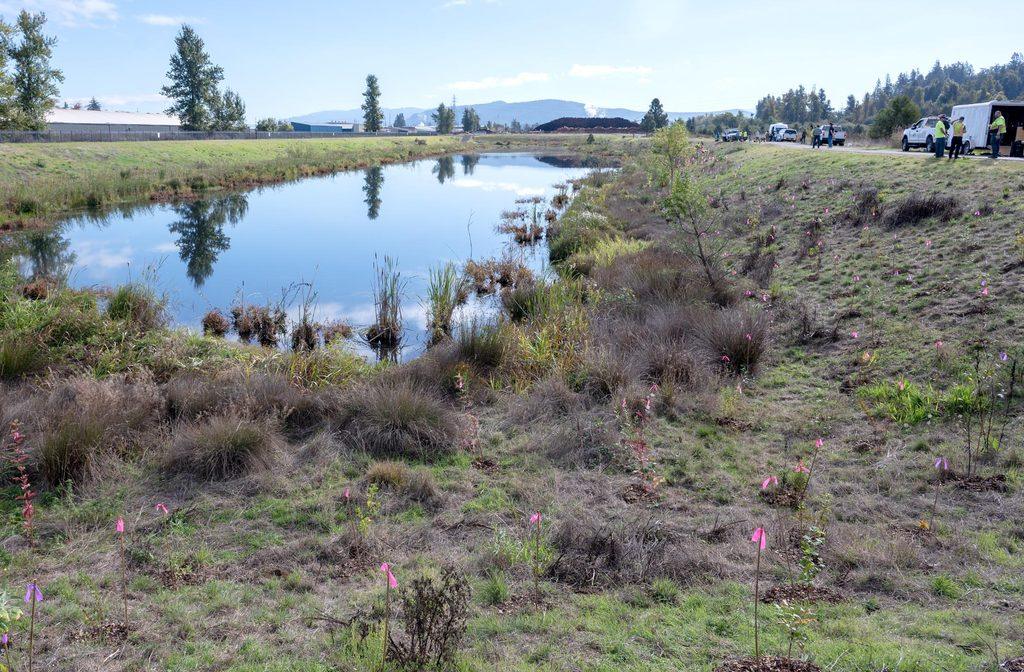
Constructed in 2016, the pond slows stormwater as it moves through the site. This allows sediment to settle, reduces erosion and helps improve water quality before the water reaches the Mill Race. The pond also helps cool the water and allows some of it to soak into the ground and replenish groundwater supplies. Native plants also absorb pollutants such as phosphorus and nitrogen.
“This site is our largest stormwater treatment pond, and adding trees will make it more functional and beautiful. Trees intercept stormwater, provide shade, and help cool the site. We chose these native trees and shrubs for their habitat value and to create a robust plant community for everything living there.”
– Ted Shriro, Water Resources Analyst, City of Springfield
Stormwater improvements protect local waterways
The Oregon Department of Environmental Quality issues the City a municipal stormwater permit that requires Springfield to manage stormwater pollution, including through green stormwater infrastructure such as the Mill Race pond. The City also works to reduce water temperatures in the Willamette River, making the south side of the pond a strategic location for trees that will provide shade as they grow.
Springfield’s stormwater program is funded through stormwater user fees rather than property taxes. Those fees support stormwater infrastructure and the City’s work to protect water quality.
Over several decades, the Springfield Mill Race near the Booth-Kelly Trailhead has transitioned from an industrial area to wildlife habitat and a community amenity. The City and Willamalane Park and Recreation District continue to maintain and restore the area, which is accessible from three trailheads along the Mill Race Path. Visitors may spot red-winged blackbirds, otters and beavers in the area. Coyotes have also been observed.
Visit the site and get involved
Community members can see the planting area from the Mill Race Path near the Booth-Kelly Trailhead. The stormwater treatment pond is on the north side of the path. Community members can also participate in future waterway stewardship projects, including plantings along the Mill Race, through the City’s Stream Team program.
About the City of Springfield’s Stormwater Team
The City’s Stormwater Team works to reduce pollution in local waterways by helping residents and businesses understand how everyday actions affect water quality.
About the City of Springfield
The City of Springfield is dedicated to providing high-quality services for its community members, fostering a safe and vibrant city, and preserving its rich heritage. Through innovative initiatives and strong partnerships, Springfield strives to enhance the quality of life for everyone who calls it home.
🌐 Website | 👍 Facebook | 📸 Instagram | 🐦 Twitter/X | 📺 YouTube
Discover more from Springfield Bottom Line
Subscribe to get the latest posts sent to your email.