Springfield and Eugene Chambers honor 2025-2026 Leadership Eugene Springfield cohort at graduation
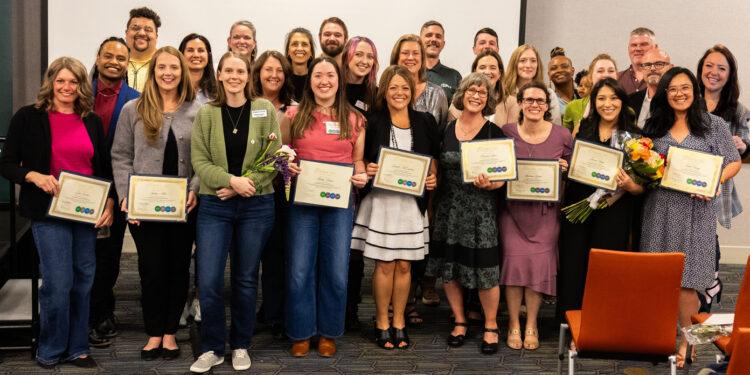
Following eight months of civic leadership development, the 2025-2026 Leadership Eugene Springfield (LES) cohort recently graduated from the Springfield Chamber and Eugene Chamber‘s joint program.
32 participants were honored by Chamber staff, community members, Springfield Mayor Sean VanGordon, and Eugene Mayor Kaarin Knudson at the graduation ceremony. This celebration commemorated the participants’ impressive accomplishments in the program, including completing group projects in the local community.
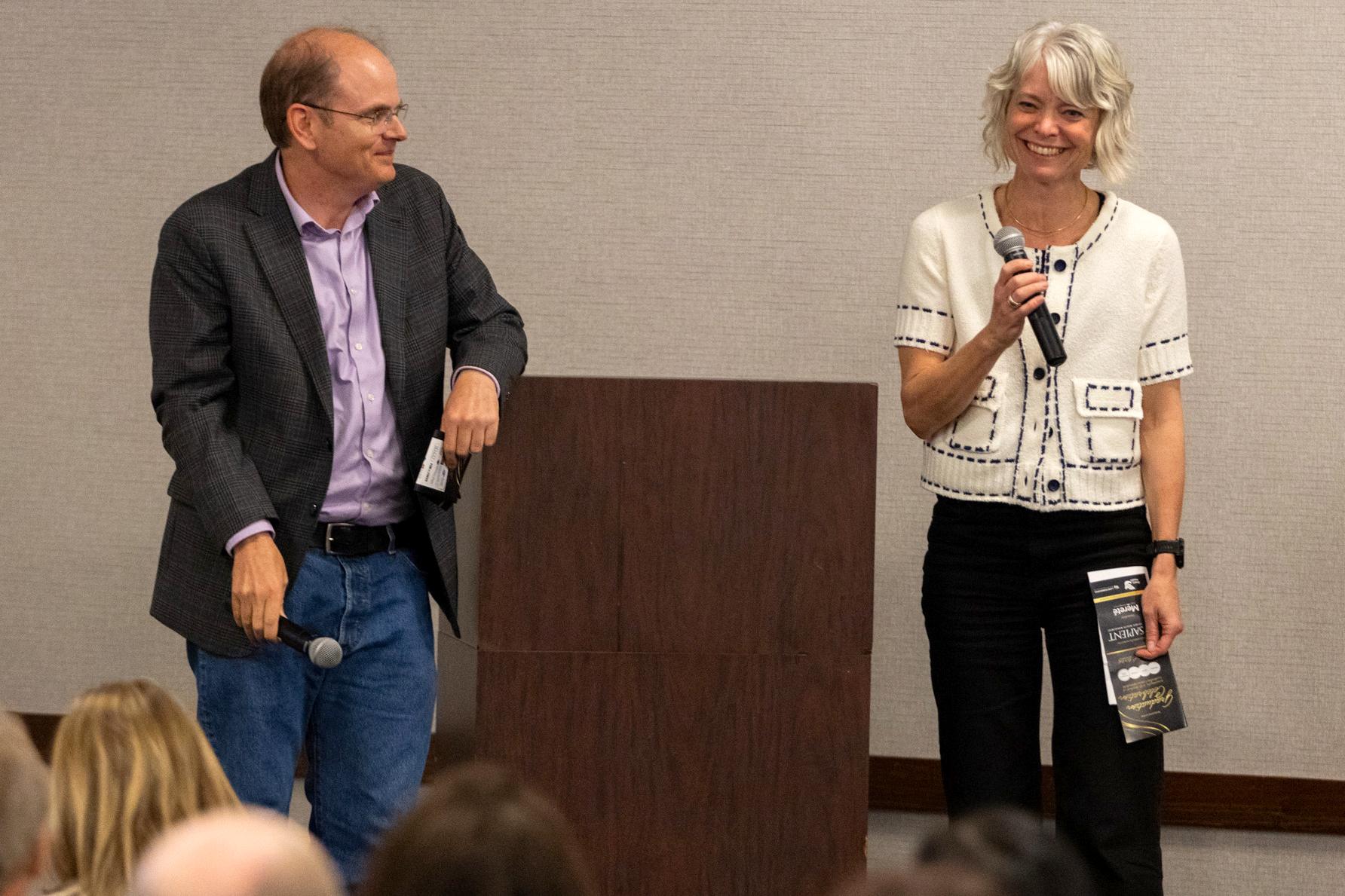
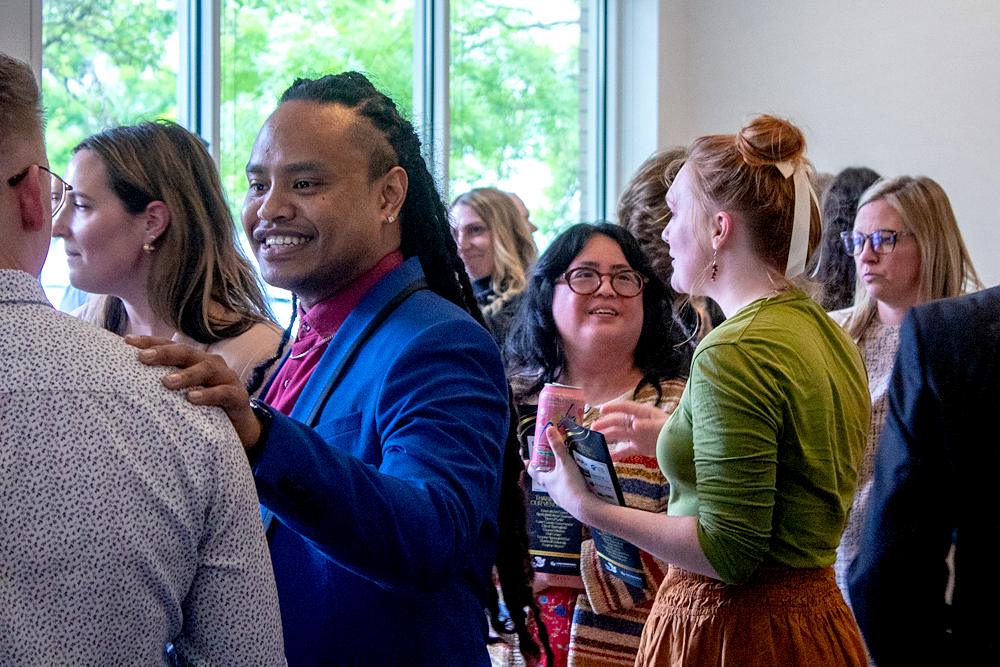
Photo Credit: Joey Tanner
Thank you to Craig Runyon, Chair of the LES Steering Committee, for sharing a final reflection and to Hayley Radich, Class Project Liaison of the LES Steering Committee, for providing an overview of the cohort’s projects.
Final Reflection
Craig Runyon, Chair, LES Steering Committee
A joint effort between the Eugene and Springfield Area Chambers of Commerce, LES has been developing up-and-coming community leaders in the area for nearly 40 years. Over an eight-month period, the cohort deepens their understanding of regional issues through full-day sessions, covering topics like public safety, government, health services, education, economic development, and the arts.
The program is driven by a strong commitment to our community. I have had the pleasure of chairing the steering committee, which is a group of about 25 LES graduates. In collaboration with liaisons from the Chambers, the steering committee plans each session to create an enriching experience. The cohort hears from key community leaders through panel discussions, tours, and presentations hosted by local organizations. Businesses also support the program by providing venues, meals, transportation, and other logistical support.
The classes give the cohort a better understanding of community issues and often push the cohort out of their comfort zone to facilitate growth. Participants also complete a personal adventure and a group project focused on community challenges.
The 2025-2026 cohort’s efforts ranged from engaging with elected officials and volunteering to starting businesses, building connections, and improving work-life balance. Despite following different paths, all participants shared a deep sense of civic engagement and connection. LES concluded with a graduation celebration where family, colleagues, and supporters gathered to recognize the cohort’s growth.
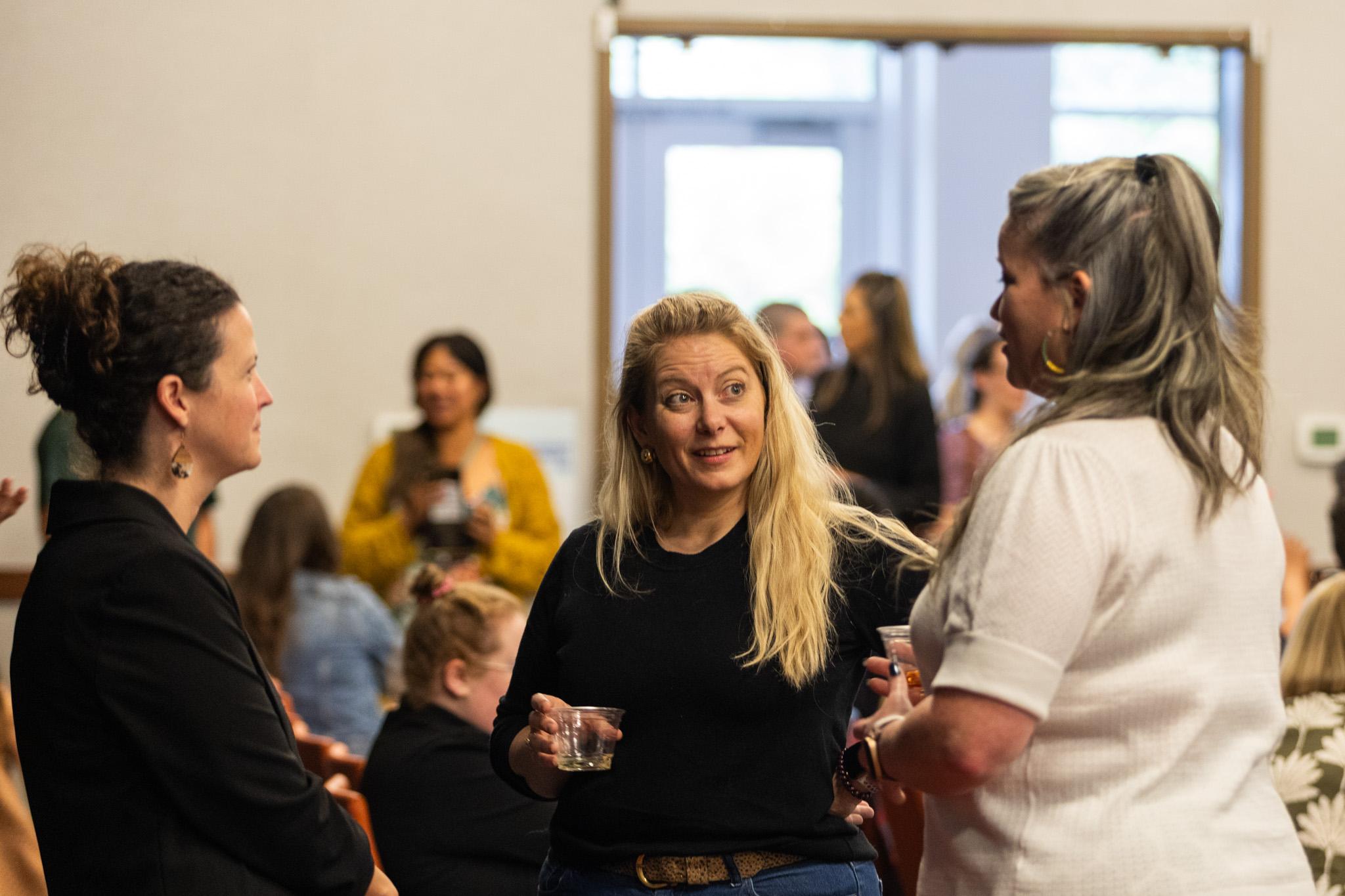

Photo Credit: Joey Tanner
Thank you to the LES Steering Committee, our facilitator, Rachel Ulrich, and Chamber liaisons for their dedication, effort, and willingness to volunteer their time. To the graduating cohort, I encourage you to be engaged in the community and make a positive impact. Congratulations!
LES Project Recap
Hayley Radich, Group Project Liaison, LES Steering Committee
This year flew by as the 2025–2026 Leadership Eugene Springfield cohort celebrated graduation in mid-May. Beginning in October, cohort members were tasked with developing group projects focused on addressing key challenges within our community. Participants were divided into four groups centered on housing, economic development, community belonging, and health and human services. Over the course of eight months, each group collaborated closely with local organizations and community partners to identify needs, develop solutions, and implement impactful projects designed to create lasting positive change.
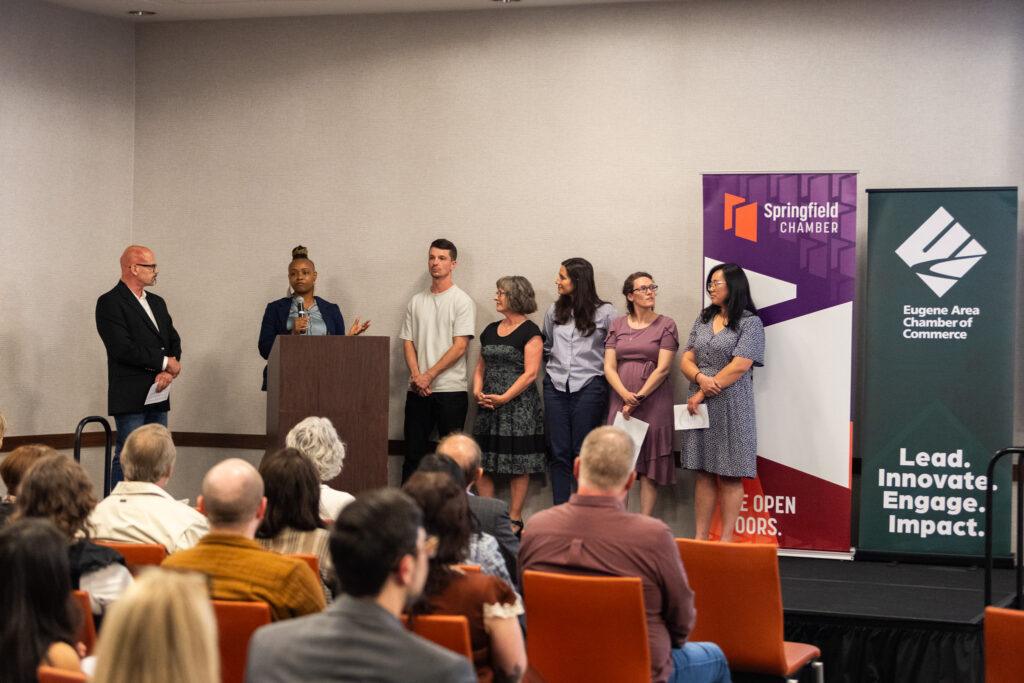
Photo Credit: Joey Tanner
Housing Advocacy
The Housing Group partnered with ACT NOW LANE to address community housing challenges through education and advocacy. Their project focused on combating NIMBYism (“Not In My Backyard”) by helping community members better understand the housing crisis and empowering them to support housing development solutions. The group created and delivered a community presentation that explained the housing continuum, explored common concerns surrounding development, and introduced practical advocacy tools through the “Four I’s of Intervention”: Inquire, Inform, Interrupt, and Inspire. By providing accessible education, real-world examples, and actionable next steps, the project aimed to foster greater community engagement and encourage residents to become active advocates for housing solutions in Lane County.
Health and Human Services
The Health and Human Services Group partnered with Relief Nursery to support vulnerable families through a community lice treatment supply drive. After conducting outreach with several local nonprofit organizations to better understand community needs, the group identified a critical barrier impacting families served by Relief Nursery: access to lice treatment supplies. The team organized a multi-week campaign that included fundraising, community outreach, marketing efforts, and supply donations from local businesses and healthcare organizations. Their efforts secured 300 pairs of disposable gloves, which were donated by AIMS Mobile Nursing, and raised $940, providing enough supplies to support all youth currently enrolled in Relief Nursery’s Therapeutic Early Childhood Program. The project highlighted the importance of collaboration, community responsiveness, and practical support for families facing barriers to stability and care.
Increasing Economic Development
The Economic Development Group focused on increasing affordable housing development and economic growth by addressing barriers related to Oregon’s prevailing wage regulations. Specifically, the group examined how the Oregon Bureau of Labor and Industry’s interpretation of the Residential Construction Exemption was unintentionally increasing costs and slowing affordable housing projects when developments began with non-residential structures. To advocate for policy clarification, the team submitted a letter to the Oregon Senate Committee on Labor and Business supporting Senate Bill 1566 and recommending clearer local definitions of “residential construction” for Eugene and Springfield. Their work emphasized the connection between housing affordability, job creation, and regional economic stability while encouraging collaboration between community leaders, local governments, and state agencies to better align policy with Oregon’s housing goals.
Fostering a Sense of Belonging
The Community + Identity Group explored what helps people feel connected and included in the Eugene-Springfield community through a bilingual community survey and outreach effort. Gathering feedback from approximately 91 respondents, the group identified that belonging is most often fostered through informal, shared spaces such as parks, neighborhoods, and community gathering places. The survey also revealed common barriers to connection, including time, cost, and lack of awareness about community opportunities. In response, the group created a “Belonging Bingo Card” designed to encourage simple, accessible actions that help individuals engage with their community and build relationships. By translating survey insights into practical tools for everyday connection, the project demonstrated how small, consistent actions can strengthen community belonging and social connection across Eugene and Springfield.
Congratulations to the 2025-2026 Leadership Eugene-Springfield cohort! To learn about each cohort member, check out their profiles here.
This program would not be possible without the support of sponsors and community partners. Thank you to the annual sponsor, PeaceHealth, and to Lane Workforce Partnership, who provided scholarships to participants. Additionally, thank you to the program facilitator, Rachel Ulrich of RU Talking Consultants.
Applications will be opening soon for the 2026-2027 LES cohort. Learn more about the program here.
More about Leadership Eugene Springfield
Since 1986, the Eugene and Springfield Chambers of Commerce have promoted and fostered the development of civic leadership in our communities. The purpose of Leadership Eugene Springfield is reflected in its goal to create knowledgeable, networked, skilled, involved and passionate leaders who will:
- Be involved in creating a positive future for their community.
- Advocate for and represent the community as a whole.
- Value the interaction of government, business, and charitable institutions in creating a healthy Eugene/Springfield economy.
Discover more from Springfield Bottom Line
Subscribe to get the latest posts sent to your email.