2026 Candidate Questionnaire- Oregon House, District 7
The Springfield Area Chamber of Commerce works to strengthen our local economy by serving as a voice for business. Our advocacy work is grounded in principles that support private enterprise, entrepreneurship, and long-term economic competitiveness. From tax policies that support growth to clear, predictable regulations, infrastructure investment, workforce readiness, development-ready land, and efficient permitting, elected leaders have meaningful influence over the conditions in which local employers operate, invest, and grow.
To help our members make informed decisions in the 2026 General Election, the Chamber invited candidates for the Oregon House District 7 seat to respond to five questions focused on business, economic development, and the policy issues that affect Springfield’s economy. Each candidate received the same questions and response guidelines, and their answers are published as submitted.
Oregon’s General Election is Tuesday, November 3. Ballots begin mailing October 14 and must be returned to a drop box by 8:00pm on November 3 or, if mailed, postmarked by Election Day.
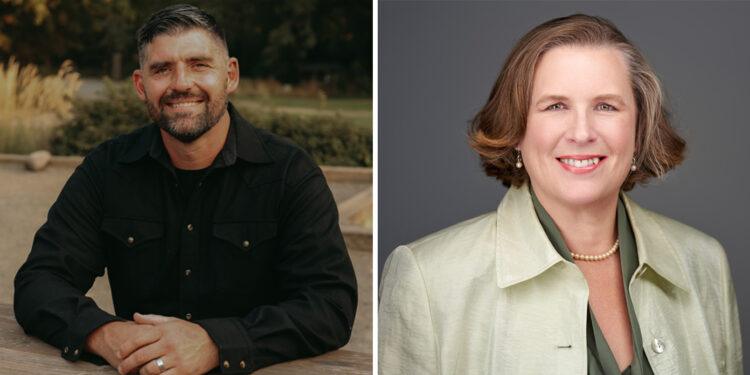
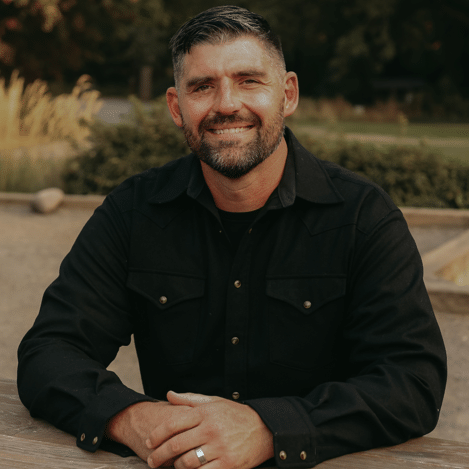
Adam Wilson
Party Affiliation: Republican
Campaign Website: https://www.wilsonforspringfield.com/
Candidate Bio: Adam is a sixth-generation Oregonian, lifelong Lane County resident, small business owner, and proud father of four. Growing up, Adam learned hard work firsthand swinging a hammer and changing tires. Now he’s a financial advisor, helping families balance their budgets.
1. Oregon’s economic competitiveness: Oregon employers compete nationally and globally for investment, workers and customers. What do you see as the greatest barriers to Oregon’s economic competitiveness today, and what two or three policy changes would you prioritize to make Oregon a stronger place to start, operate and grow a business?
The biggest burdens facing Oregon businesses across the state are high taxes and excessive regulations that drive local companies away and make new entrepreneurs think twice about founding a business in our state. The problems we have created for our economy are not complicated, and we do not need to look far for solutions. If elected, I would reform the corporate activity tax to protect small businesses. I would also push for reviews of Oregon’s existing 224,000 state-imposed regulatory restrictions. Business owners are struggling to keep up with rulemaking and rising taxes, but we can change course before it is too late.
2. Taxes and the cumulative cost of doing business: Businesses are affected not only by individual taxes and fees, but by their cumulative cost and administrative complexity, with potential implications for hiring, compensation, and investment. What principles should guide your approach to tax and revenue policy, and how would you evaluate the potential impact of new taxes, fees or mandates on employers, workers, and economic growth?
Oregonians and Oregon’s businesses are already overburdened. If elected, I promise to always fight for no new taxes, end of story.
3. Regulation and permitting: Businesses need regulations that are clear, consistent, and reasonably predictable in both cost and timeline. Where do you see opportunities for Oregon to improve its permitting and regulatory systems while still achieving the public outcomes those regulations are intended to protect?
Oregon can make regulation more predictable by improving how rules are developed and how businesses find them, without weakening the outcomes they protect.
First, rulemaking should account for compliance costs up front. Agencies should bring regulated businesses into the process early through balanced advisory committees and publish detailed cost estimates, including the burden on small businesses. They should also weigh lower-cost alternatives that achieve the same goal.
Second, timelines should be reliable. A consistent runway between a rule’s finalization and its effect date gives businesses time to adapt, and requiring agencies to respond to public comments shows how input shaped the outcome.
Third, rules should be easy to find and understand. A single, searchable statewide system for rulemaking information, paired with a plain-language guide to administrative rules, would cut the time and expense of figuring out what applies, especially for small businesses without compliance staff.
4. Land, infrastructure and site readiness: Oregon’s supply of development-ready employment land, supporting infrastructure, and the ability to bring sites online within competitive timelines can influence where employers expand, invest and create jobs. What should the Legislature do to improve site readiness and infrastructure statewide, and how should those efforts translate into stronger economic opportunity for Springfield and the surrounding area?
Employers choose sites they can build on quickly, so the Legislature should treat site readiness as a core economic priority. A dedicated, recurring state fund for water, sewer, roads and power would let communities prepare land before an employer shows up rather than after. That money works best alongside faster, more coordinated permitting: bringing already-designated land into production, having state agencies review projects concurrently, and enforcing decision deadlines. Publishing a scorecard on site readiness, permit timelines and job growth would keep the state accountable for results. For Springfield, this means prioritizing shovel-ready industrial sites that fit the region’s strengths in manufacturing, wood products, food processing and logistics. Pairing those sites with reliable, affordable power and workforce training tied to local employer needs would turn new investment into good jobs.
5. Workforce and employer competitiveness: Oregon employers continue to identify workforce availability, skills and rising employment costs as significant challenges. What policies would you prioritize to strengthen Oregon’s workforce pipeline and participation, and how should legislators weigh worker protections and benefits against costs and operational impacts on employers, particularly small businesses?
Oregon’s workforce pipeline starts with giving young people real paths into work that exists. I would prioritize career and technical education in welding, electrical, automotive, healthcare and construction, and give local schools and employers a stronger voice in designing those programs so training matches the jobs available in places like Springfield and Lane County. I would also fix the unemployment system so it connects people to jobs quickly instead of trapping them in delays and paperwork.
On worker protections and benefits, legislators should ask what a proposal costs, who bears it, and whether it delivers results before adding new mandates, fees or taxes. Small businesses can’t absorb layered compliance costs the way large employers can, so protections should be clear and predictable, with agencies accountable for the costs they impose. The goal is strong jobs and a workforce that employers can afford to hire and keep.
Kori Rodley

Affiliation: Democrat, Working Families Party
Campaign Website: Kori-Rodley.com
Candidate Bio: Kori Rodley was raised in a Douglas County logging family. After attending LCC and UO, she has spent her adult life living and working in Lane County. Kori currently works at Lane County Developmental Disabilities Services.
Kori has been Springfield’s Ward 3 City Councilor since 2019. She has chaired the Springfield Economic Development Agency (SEDA), previously chaired the Lane County Human Services Commission, and served on the Home Consortium and Fire Governance Boards.
She and her spouse, Teri, have four adult children and 2 grandkids; along with Bob the Beagle and several cats.
1. Oregon’s economic competitiveness: Oregon employers compete nationally and globally for investment, workers and customers. What do you see as the greatest barriers to Oregon’s economic competitiveness today, and what two or three policy changes would you prioritize to make Oregon a stronger place to start, operate and grow a business?
Oregon has gotten off track in supporting and encouraging home-grown businesses. Some of the biggest, most sustaining businesses and industries have been those born and grown right here. We need to be solutions-focused and invest in the workforce that employers need. That means making sure there is affordable housing, great schools, and communities where people can build a great life.
We have to take a hard look at regulations and bureaucratic processes. The question I am constantly asking is “Why? What are we trying to solve for?” Our role in government is to make things easier for entrepreneurs to create, build, and grow—not harder. If we are trying to grow our economic base and build prosperity, let’s get serious about supporting policies that support that goal.
2. Taxes and the cumulative cost of doing business: Businesses are affected not only by individual taxes and fees, but by their cumulative cost and administrative complexity, with potential implications for hiring, compensation, and investment. What principles should guide your approach to tax and revenue policy, and how would you evaluate the potential impact of new taxes, fees or mandates on employers, workers, and economic growth?
We worked on some very important revenue challenges in Springfield and I take this work very seriously. We need transparency and fairness to ensure that any tax policy supports growth while not putting undue burden on any one sector. These are all lenses I will continue to bring to how we generate revenue in Oregon.
Do our policy choices help or harm? It’s a balance. We need to make objective, intentional decisions when we invest in community infrastructure so we have workers, customers, and people who want to invest in Oregon. For example, if a business is over-burdened by regulatory fees, fines, and restrictions, they cannot have the resources to pay good wages and attract talented workers who live, work, and put down roots in our communities. Business and industry have to have a voice at the table in helping find workable solutions.
3. Regulation and permitting: Businesses need regulations that are clear, consistent and reasonably predictable in both cost and timeline. Where do you see opportunities for Oregon to improve its permitting and regulatory systems while still achieving the public outcomes those regulations are intended to protect?
One of the ways I’ve approached this in my role as councilor is “How can we streamline processes? Can we work them simultaneously to eliminate any duplication or unnecessary wait time?”
Large state projects often have to interface with multiple agencies and timelines. Let’s help businesses work a project (expansion, upgrades, market growth, etc.) as one project so that the business or applicant has the fewest touches, timelines, and delays as possible. This saves time and it saves money.
It is fair for people to help pay real costs for getting a project off the ground—it isn’t fair to pay duplicate and overlapping costs. It’s a waste to fill out multiple forms with the same information and have to work through various agencies and regulatory processes. State agencies should be required to meet timelines and ensure that government is not increasing costs for business partners through its inefficiencies.
4. Land, infrastructure and site readiness: Oregon’s supply of development-ready employment land, supporting infrastructure, and the ability to bring sites online within competitive timelines can influence where employers expand, invest and create jobs. What should the Legislature do to improve site readiness and infrastructure statewide, and how should those efforts translate into stronger economic opportunity for Springfield and the surrounding area?
This is one of the biggest barriers for local government and the state hasn’t been a good partner.
The Legislature is great at handing down quotas and requirements without any resources for getting land ready to build. Asking for help only brings a deluge of additional restrictions. We must make it easier to annex land and dig in to revise land use laws that stop development from happening.
The Legislature has a role in funding the roads, water, sewer, fiber, and more that these opportunities need.
I know firsthand how challenging it is to encourage development without adequate support. This is one reason I am running for this seat. I’ve spent years advocating for infrastructure investment to grow our local businesses. I pushed to include Mohawk Street in a voter-passed bond and we’ve seen businesses locate (e.g. Dave’s Hot Chicken) and expand because of those improvements.
5. Workforce and employer competitiveness: Oregon employers continue to identify workforce availability, skills and rising employment costs as significant challenges. What policies would you prioritize to strengthen Oregon’s workforce pipeline and participation, and how should legislators weigh worker protections and benefits against costs and operational impacts on employers, particularly small businesses?
We have talked a lot about investing in apprenticeships and workforce training, but I don’t think we are doing enough. One size does not fit all and each community has different needs, so I think we need to lean into more flexibility—helping to support and incentivize businesses and employers who are willing to train workers on the job. We have to protect and grow trade and worker training programs in our public schools (middle and high), as well as community colleges. Instead of penalizing, let’s help businesses improve safety and protections so they can have a healthier workforce, less turnover, and increased productivity. We pit this issue as one side against the other instead of a win-win. Safe, productive work environments mean a healthier workforce and more efficient business outcomes.
Discover more from Springfield Bottom Line
Subscribe to get the latest posts sent to your email.