Knight Campus Tour Highlights an Innovation Ecosystem Driving Regional Economic Growth
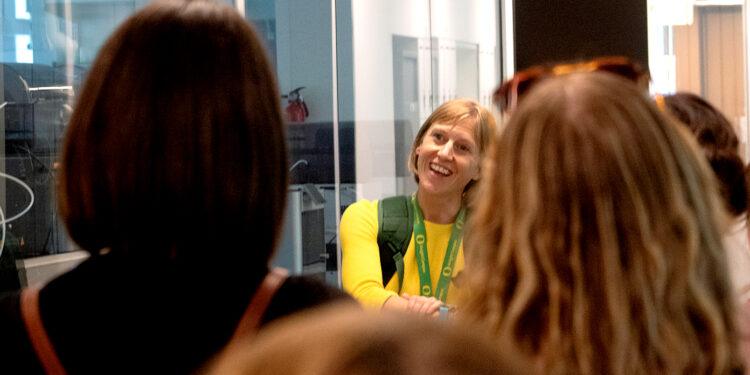
The University of Oregon‘s Phil and Penny Knight Campus for Accelerating Scientific Impact is often recognized for its groundbreaking research, but during the Springfield Area Chamber of Commerce‘s recent Chamber Roundtable + Tour, attendees heard a broader story: one of workforce development, entrepreneurship, and a burgeoning innovation ecosystem.
The program opened by framing the Knight Campus as more than a world-class research facility. It is an important economic development asset with the potential to create new technologies, new companies, new career opportunities, and long-term investment.
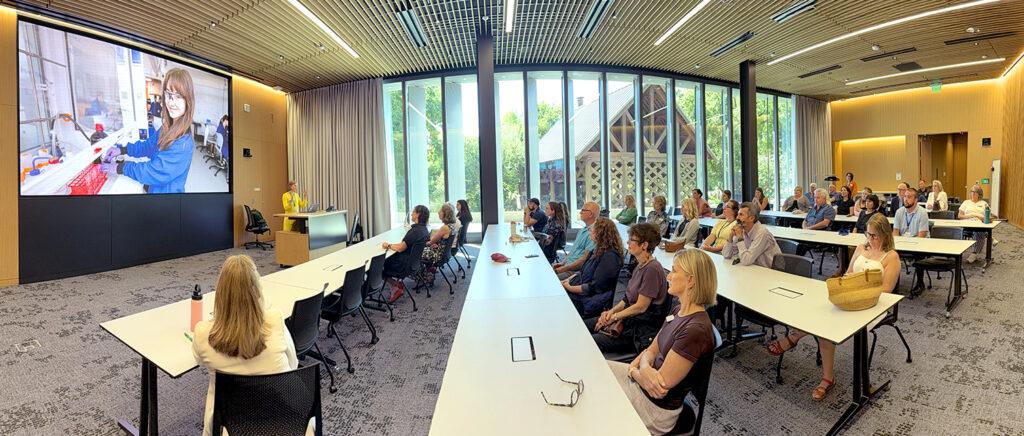
Tina Guldberg, the University of Oregon’s Associate Vice President of Economic Development and Strategic Relations, whose work focuses on building partnerships among industry, government and economic development organizations, welcomed attendees before introducing Callie Johnston, Chief Development Officer for the Knight Campus, who led the afternoon’s presentation.
Beyond the Laboratory
Hosted in Building 2 of the Knight Campus, which just opened in March of this year, the program explored how the university is accelerating discoveries from the laboratory into the marketplace while helping position the Southern Willamette Valley as a nationally competitive hub for science, technology and innovation. Johnston said the two-building campus is expected to reach full capacity around fiscal year 2031, ultimately housing approximately 750 faculty, researchers, students and staff.
Callie Johnston described the campus’ mission as “science advancing society” by shortening the time between scientific discovery and real-world application. Rather than allowing promising research to remain in academic journals, the Knight Campus encourages researchers to work alongside industry partners, clinicians, and entrepreneurs to develop technologies that improve lives while creating new business venture opportunities.
“Our job is to accelerate discoveries out of the lab and into the world.”
– Callie Johnston, Chief Development Officer, Phil and Penny Knight Campus for Accelerating Scientific Impact
That approach has implications well beyond the university.
The Knight Campus also connects directly to broader regional economic development efforts. The Springfield Chamber is an active partner in the Southern Willamette Valley Innovation Corridor (SWVIC), a regional initiative focused on leveraging the area’s research, industries, and workforce to drive business growth. Within that work, the Knight Campus represents an increasingly important asset for attracting investment, growing high-wage industries, and building the workforce needed to support them.
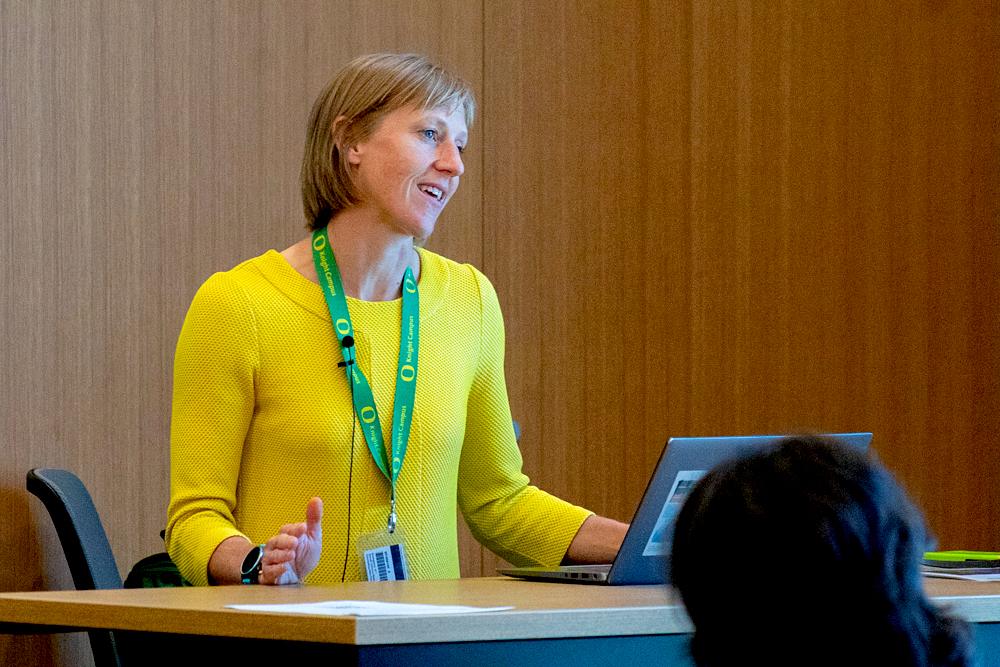
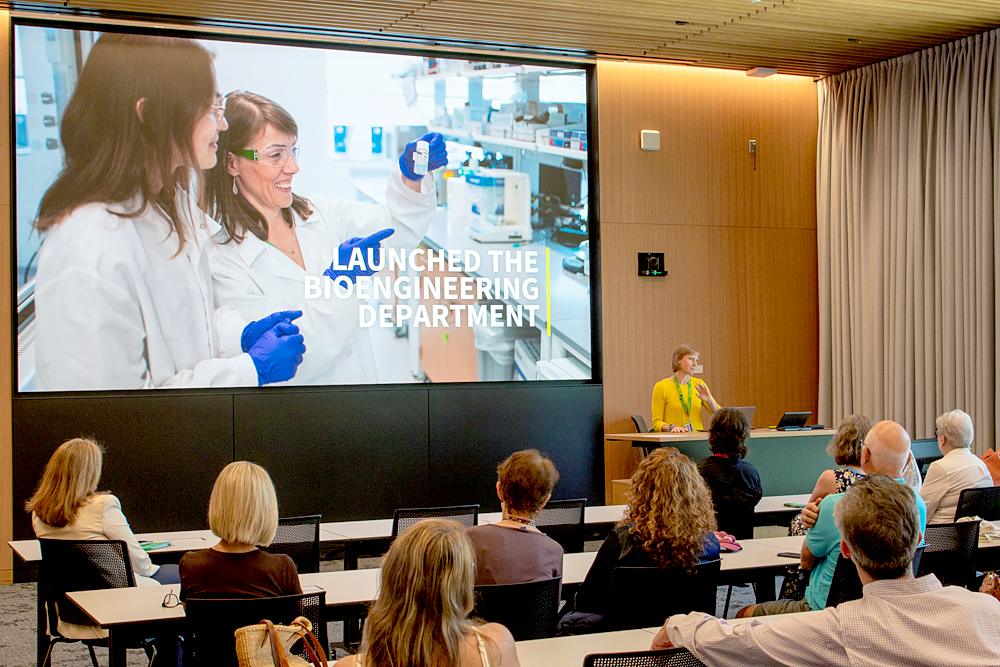
Johnston highlighted several ways the Knight Campus is contributing to that vision. Since welcoming its first graduate students in 2020, the campus has expanded rapidly, launching the University of Oregon’s first engineering degree (a joint bioengineering Ph.D. program with Oregon State University), growing graduate enrollment dramatically, and developing workforce programs tailored to the needs of Oregon employers.
Preparing Tomorrow’s Workforce
One of those efforts, the Knight Campus Graduate Internship Program, prepares approximately 150 master’s students each year through industry-informed coursework before placing them in internships with private employers. New graduates, on average, receive seven job interviews and two job offers, with roughly half choosing to remain in Oregon – helping strengthen the state’s pipeline of highly skilled talent.
The Knight Campus also works with more than 200 industry partners, ranging from global companies to emerging startups, creating opportunities for businesses to collaborate directly with researchers while helping shape the skills employers need in tomorrow’s workforce.
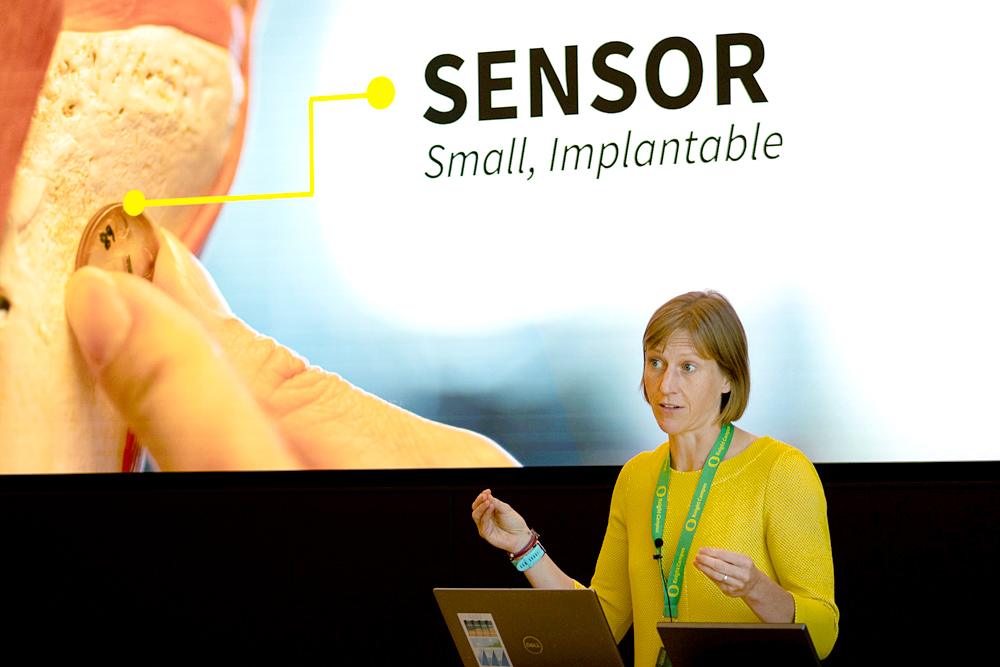
Johnston illustrated the Knight Campus model through the story of Kylie Williams, Ph.D., the first graduate of the University of Oregon’s bioengineering Ph.D. program and the first student to complete the campus’ entrepreneurship and innovation specialization. Now serving as Clinical Director for Penderia Technologies, the Knight Campus’ first startup company, Kylie described in a video how the program combined cutting-edge engineering research with business education and entrepreneurship, preparing her to move directly from the laboratory into a leadership role developing biomedical technology for the marketplace.
“I could confidently say ‘I can fulfill this role’ right after my Ph.D., in a startup environment, because of the training I received at the Knight Campus.”
Kylie Williams, Ph.D., Clinical Director, Penderia Technologies
Creating the Next Generation of Companies
Commercialization is another defining characteristic of the campus. Johnston explained that researchers are encouraged to think beyond discovery by developing technologies with real-world applications and launching startup companies around those innovations. The campus supports that process through business mentoring, incubator space, seed funding, and connections to venture capital.
Those efforts are already producing results. Companies launched from Knight Campus research are advancing technologies in regenerative medicine, biosensors, and biotechnology while creating opportunities for those businesses to grow in Oregon rather than leaving the state.
Driving Innovation and Competitiveness
Johnston also emphasized the Knight Campus’ role in broader statewide conversations around innovation and competitiveness, including SWVIC, the Oregon Prosperity Council, and Oregon’s Life Sciences Task Force. Those collaborations seek to ensure that discoveries made in Oregon translate into new businesses, family-wage jobs, and long-term economic prosperity.
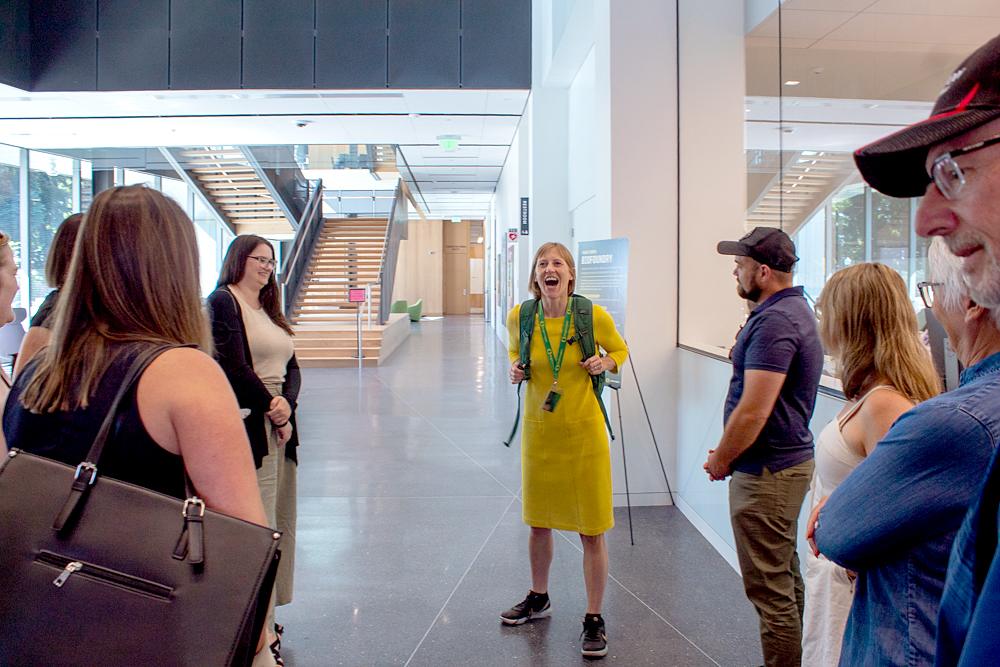
For Chamber members, the presentation reinforced the economic opportunity created when research moves beyond the laboratory and into the marketplace. By connecting research institutions, entrepreneurs, and public-sector partners, the region has an opportunity to translate innovation into new companies and long-term economic growth, strengthening the Southern Willamette Valley’s position in science, technology, and advanced manufacturing.
Tour offers a firsthand look inside the Knight Campus
Following the presentation, attendees toured both Knight Campus buildings, gaining a behind-the-scenes look at the research spaces, teaching labs and innovation facilities that support the university’s mission of accelerating scientific discoveries into real-world applications.
The tour highlighted the campus’ continued growth with the recent opening of Building 2, a 185,000-square-foot facility that transformed the Knight Campus from a single research building into a true campus. The expansion doubles the university’s capacity for biomedical research and development while providing additional space for academic programs, startup incubation and collaboration with industry partners.
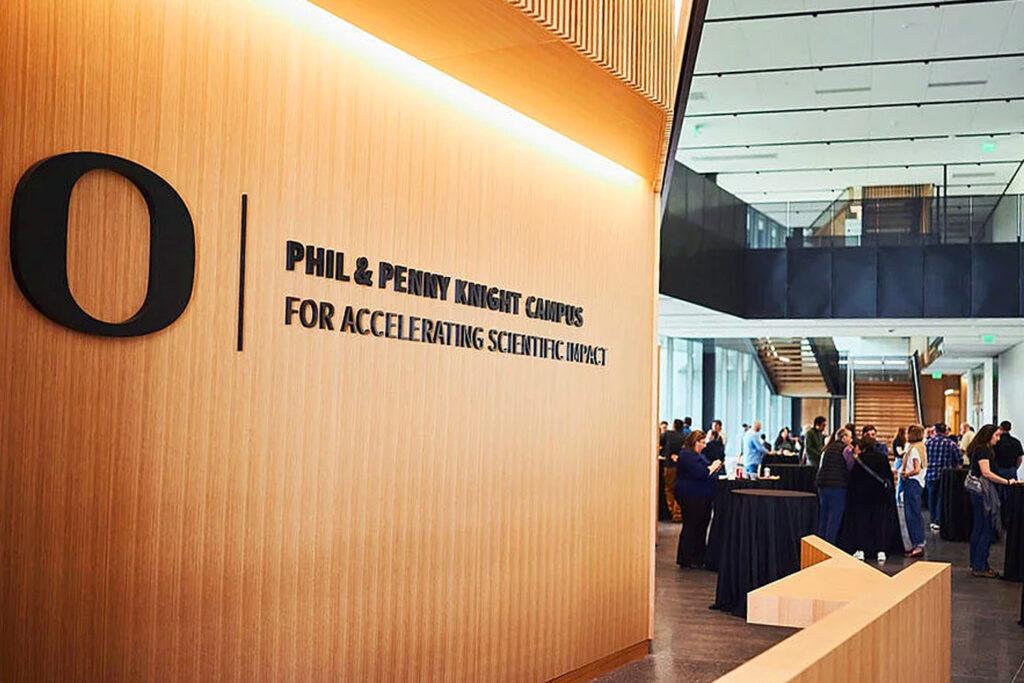
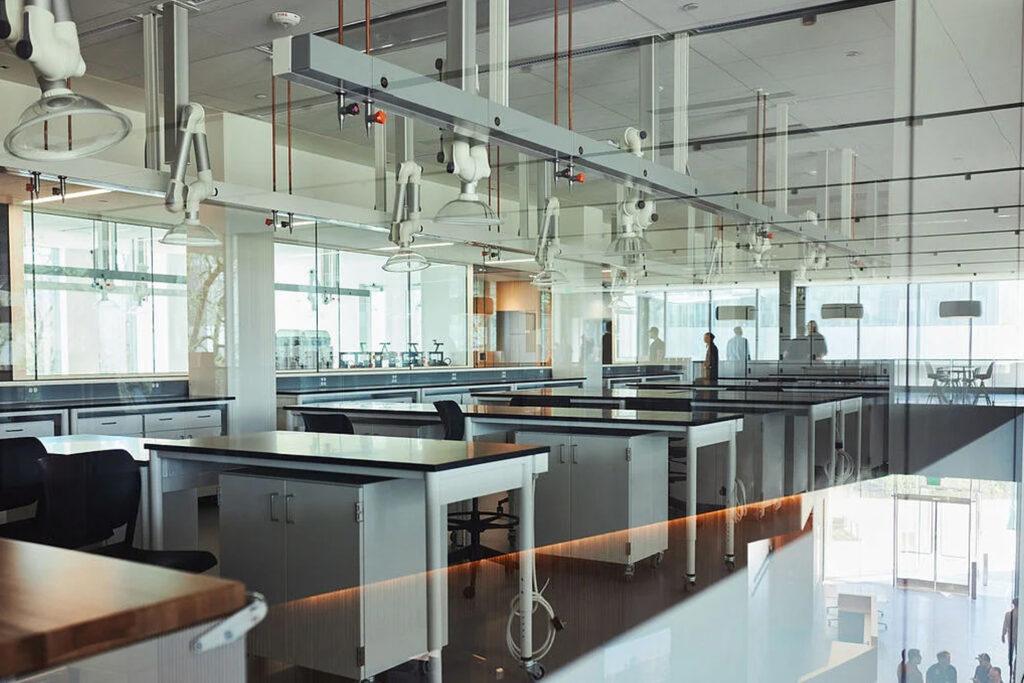
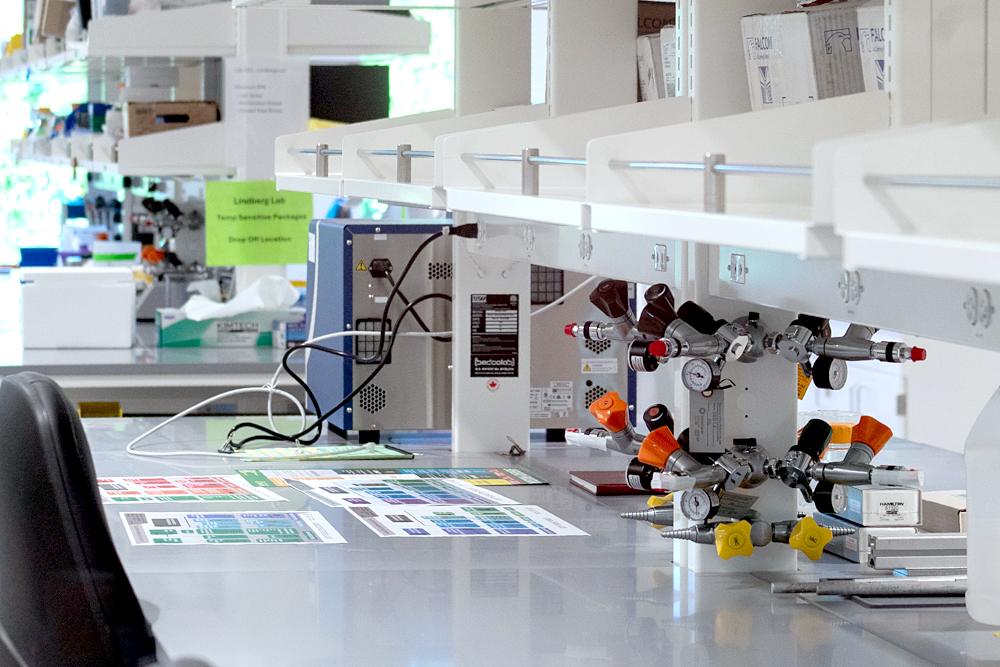
Top and bottom-left photos courtesy of Hoffman Construction/Nine 84
Among the spaces featured on the tour were the BioFoundry, a shared research facility where scientists use advanced technologies to study and develop synthetic cells, tissues and organs; student makerspaces and engineering teaching labs that provide hands-on training; “spin spaces” to incubate new startup companies; and the Papé Family Innovation Center, which offers flexible wet-lab space for startup companies emerging from Knight Campus research.
Attendees also learned about the building’s computational suite, home to the Center for Biomedical Data Science, a joint initiative between the University of Oregon and Oregon Health & Science University that applies advanced data science and artificial intelligence to biomedical research. Together, the facilities illustrate how the Knight Campus is bringing research, education and entrepreneurship together under one roof while strengthening the region’s growing innovation economy.
Discover more from Springfield Bottom Line
Subscribe to get the latest posts sent to your email.