Chamber Roundtable Highlights Business Climate Insights
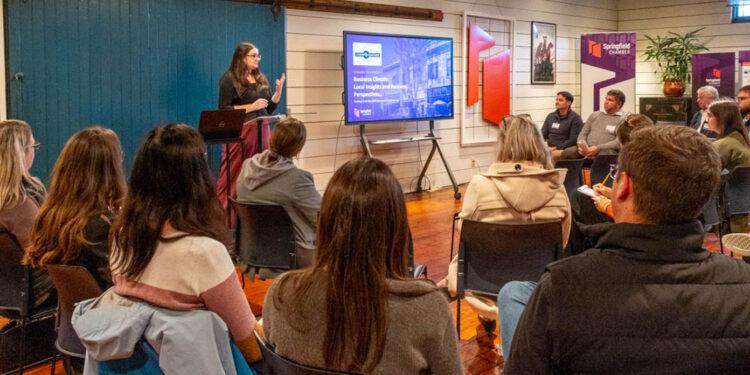
The Springfield Area Chamber of Commerce‘s Business Climate Survey collects perspectives from across the community to learn about the factors shaping local business decisions. At the recent Chamber Roundtable, attendees learned about key findings from this year’s survey, including challenges facing businesses and opportunities for growth in Springfield.
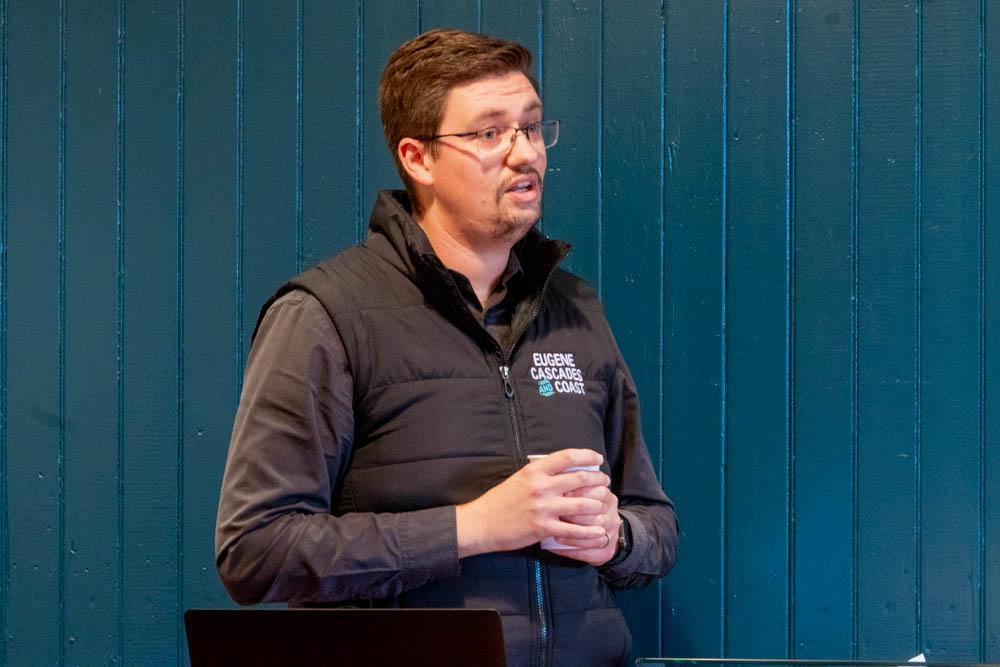
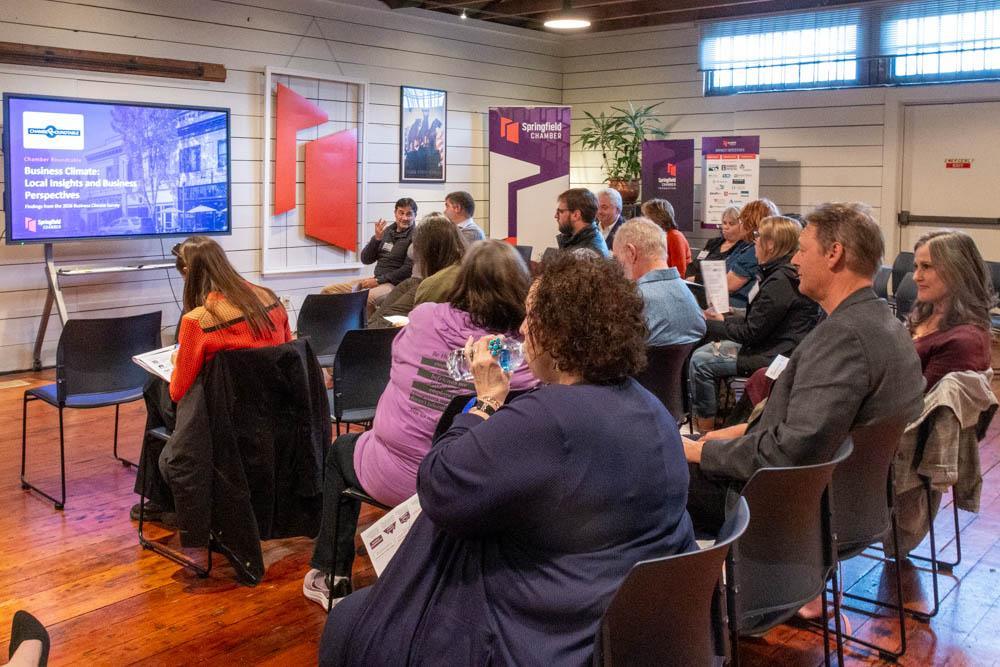
Sponsored by Travel Lane County, the event began with a networking session and transitioned into a presentation by Paige Walters, Vice President, Strategy, Economic Development, and Advocacy at the Springfield Chamber. Audience members had the opportunity to ask questions and share perspectives during the program.
Survey Respondents and Economic Outlook
Walters began by sharing an overview of the 2026 Business Climate Survey data collection. In the fourth year of conducting the survey, the Springfield Chamber collaborated with the University of Oregon’s Insights Research Lab to expand participation and analyze business perspectives over time. The survey received 134 responses across 14 industries, with a range of business sizes represented and a balanced split between Eugene and Springfield participants. The number of respondents and statistical significance varied based on the question.
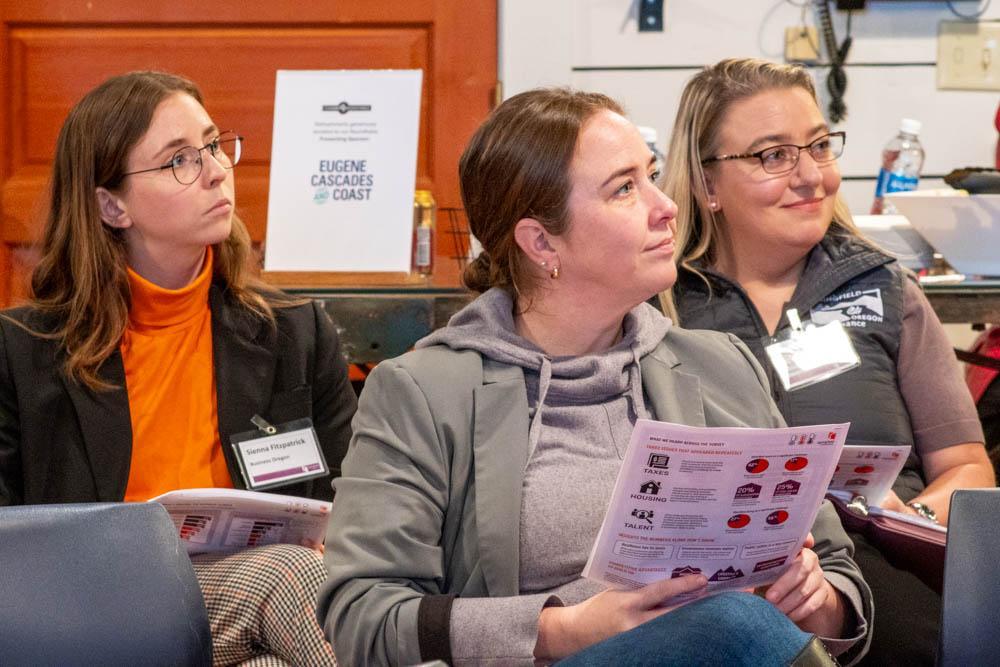
Following this, Walters discussed key economic findings reflected by the survey results, notably including a disconnect between confidence in the broader economy and confidence in individual businesses.
- 18% of respondents rated Oregon’s economy positively.
- 70% were at least somewhat confident in their own business’s financial health.
- 40% anticipate expanding or hiring in the next year.
She explained that businesses appear more confident in their ability to manage their own organizations than in the broader operating environment. However, confidence levels varied based on business size and industry, as financial health confidence increased consistently with business size and participating businesses had a range of expectations for future expansion.
Business Challenges and Perceptions
As organizations navigate the current business climate, different challenges impact their local operations. Walters cited inflation, hiring, regulations, and taxes as the top pressures selected by survey respondents, with 70% of participants identifying inflation as a top challenge. She also noted that, to mitigate issues, respondents are employing strategies such as cutting costs, adjusting their workforce, and improving efficiency.
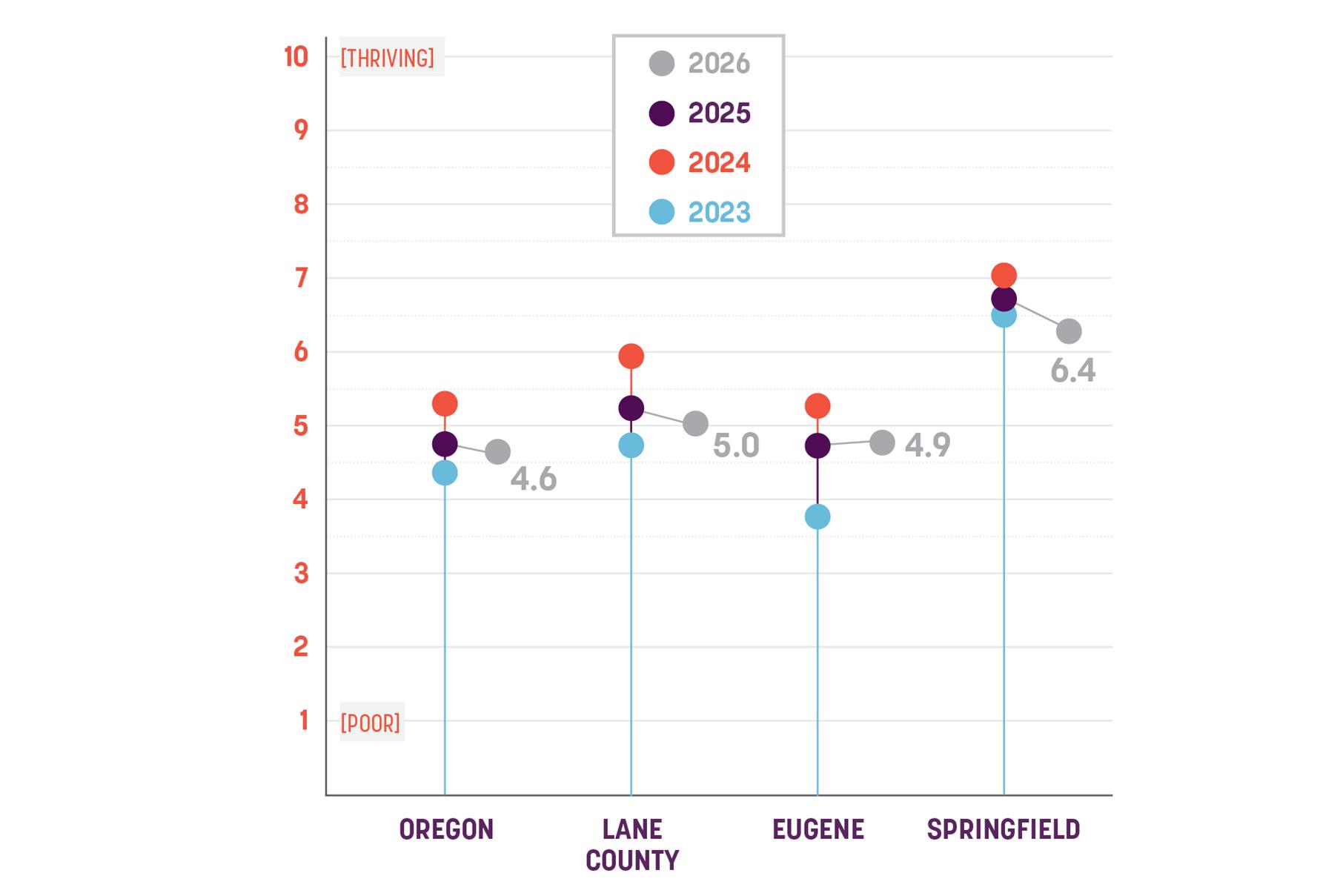
Walters also examined how survey respondents rated the business climate on a local, regional, and statewide level. As depicted in the graph above, the 2026 survey ratings remained within the range observed over the past four years. In the four geographic areas measured, average ratings declined in Springfield, Eugene, Lane County, and Oregon, with ratings staying consistent in Eugene. Because the 2026 survey used a different rating scale that was converted for historical comparison, these changes should be interpreted with caution and do not necessarily indicate a statistically significant shift in business sentiment.
Survey responses also highlighted some positive perceptions of Springfield, particularly regarding local government engagement and responsiveness. These themes emerged in open-ended feedback, even among some respondents who expressed concerns about the broader business climate.
Moving Forward
Reflecting on the survey results, Walters and the audience engaged in an interactive dialogue focused on how the findings align with their professional experiences and key takeaways. Attendees noted how inflation, the top challenge identified in the survey, has led to increased healthcare and living costs that strain their organizations. Roundtable participants discussed having to make difficult adjustments to mitigate costs, such as laying off employees and expanding operations out of state.
To advocate for changes, Walters and participants alike emphasized the importance of connecting with elected representatives to share business perspectives and encourage policies that support private enterprise, entrepreneurial endeavors, and a competitive business climates.
The Business Climate Survey is one way the Springfield Chamber ensures its programs, resources, and business advocacy priorities are informed by the experiences of local employers. Findings help identify opportunities for business education and workforce development through initiatives such as WorkReady and the Small Business Solutions Hub, while also informing the Chamber’s engagement with policymakers on issues affecting the region’s economic competitiveness. With Oregon’s 2027 legislative session approaching, these perspectives will help shape the Chamber’s advocacy priorities and ensure local businesses are represented in policy conversations.
The Springfield Chamber would like to thank the 2026 Business Climate Survey respondents for their critical insights. Additionally, thank you to the 2026 Chamber Roundtable sponsor, Travel Lane County and the Chamber’s Impact Investors, whose generous dollars support Chamber Roundtable and Roundtable + Tour programs, year-round.
Discover more from Springfield Bottom Line
Subscribe to get the latest posts sent to your email.